
Exploring Stamps with Graham Beck
An interview with YouTube host and philatelist Graham Beck
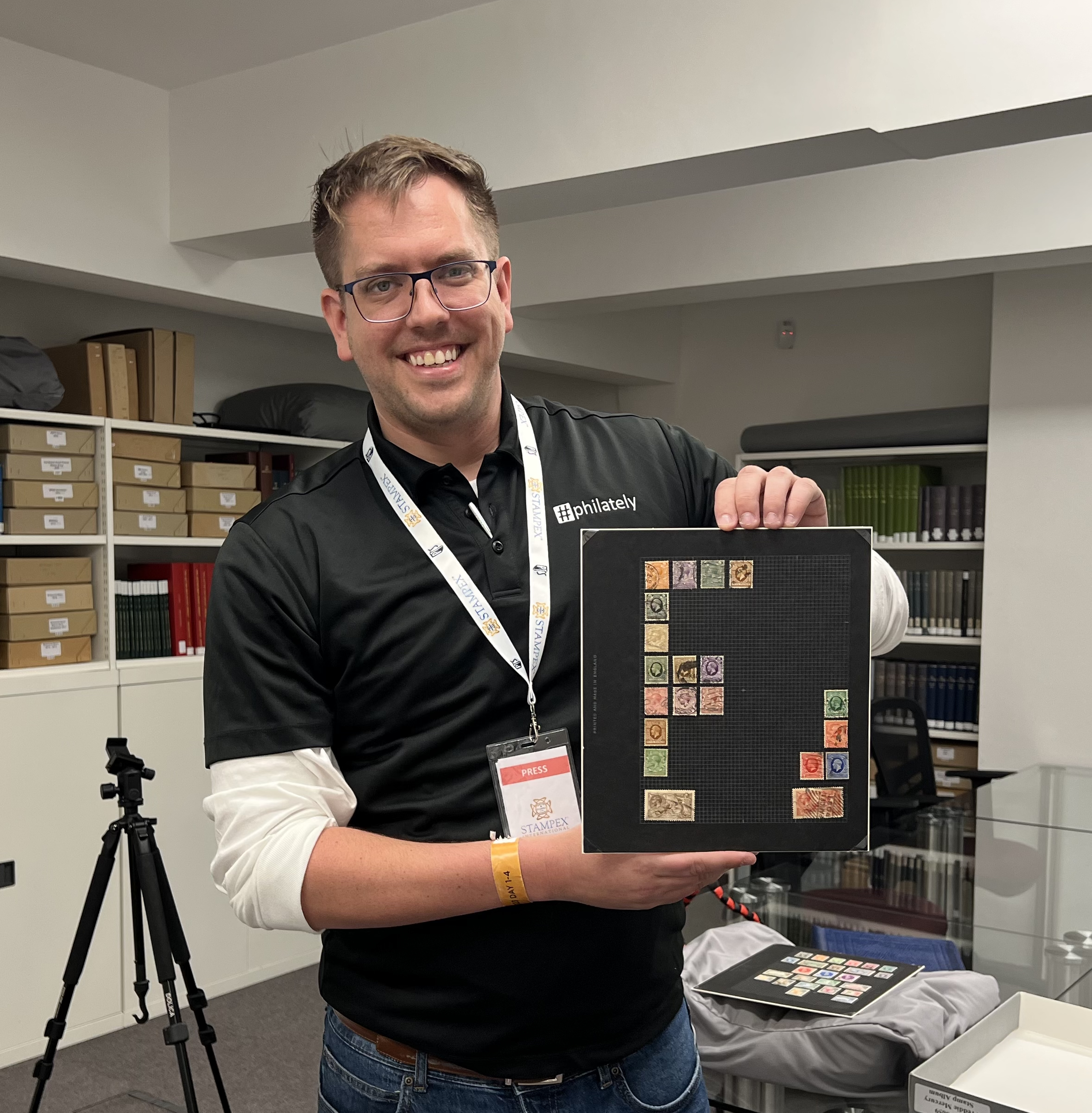
Graham Beck has brought fresh energy to the philatelic world with his Exploring Stamps YouTube channel. Its 2016 launch accompanied his immersive plunge back into his childhood hobby. Beck produces and hosts engaging investigations into stamps plucked from an unorganized stash. His curiosity-driven mini-documentaries, often laced with animations and stamp-inspired travel, bring collecting to life and highlight philately’s active, social aspects. Beck spoke with Stamps Forever fresh off participating in the Boston 2026 World Expo.
—
Where did you get your first stamps?
From the mail, while growing up in South Africa. At first they were mostly everyday South African stamps. Once family and friends discovered I was the kid who collected stamps, they started tearing the stamped corners off their envelopes. Eventually, visiting my grandmother or a friend who had family abroad, I'd be given bags of stamps. That brings in some more variety. An occasional international one would slide in there, and I'd get excited about that. All the interesting, different aspects of stamps coming through the mail helped me build up my collection. I think that's actually a pretty common origin story for collectors of my generation.
Do you recall the first American stamp that made an impression on you as a child?
The 1993 Elvis stamp. That was the one that, once I got it in my collection, I prized above all the others. It wasn't easy to get in South Africa, and I just happened to come across one. It was a really good quality one. The pinks and yellows and all that — it was just outstanding. That was the big one for me.
How has collecting itself changed for you since childhood?
Growing up in the early 1990s, I might look at a stamp and learn a little bit about its country by opening up an atlas — find the place and at least be able to say, this piece of paper comes from this land, this place. That was about as far as I could go. Like many people, eventually I put the hobby aside.
Years later, after I'd moved to the United States, I rediscovered my stamp album, and I realized that I knew almost nothing about the stamps. Now there’s an incredible amount of information available. Today, within minutes, you can uncover the person, place, event, designer, politics, history, and cultural context behind a stamp. That makes collecting incredibly rich. I started investigating the stamps one by one. That completely reignited the hobby for me. Now I search online and very quickly go down an enormous rabbit hole.
But what I struggled to find online was content that made philately approachable for someone like me, in a way that excited me. There was children’s content and very detailed reading material for established philatelists. YouTube had become my go-to place to learn how to fix a piece of my car, you know? But I couldn't find any channels dedicated to the stamp-collecting hobby. I felt there was an information gap in the middle for someone saying, “I've rediscovered my collection — now show me why this is interesting.” That was the gap I became interested in.
So was there an a-ha moment that led you to produce stamp videos?
Absolutely. I randomly pulled a blue French stamp from my childhood collection. It showed a woman's head wearing an interesting hat, but I had no idea who she was. So I searched something very basic along the lines of “French stamp, blue, woman's head.” That led me to Marianne, the national personification of the French Republic. Then I found myself learning about the French Revolution, the symbolism of the Phrygian cap, and before long I discovered that the same symbolism appeared on the state seal of New Jersey, where I now live. I even discovered that Papa Smurf wears a Phrygian cap. It sounds silly, but my mind was completely blown. One random stamp had taken me on this unexpected journey through history, symbolism, and even my own surroundings. I remember thinking: This is what stamp collecting can be now. I wanted to somehow bottle that experience and give it to somebody else.
Was that what inspired the feature where you pull a random stamp out of a box to investigate?
The random-stamp idea came directly from that Marianne experience. I hadn't selected that stamp because I already knew it had a great story. I pulled it randomly, realized I knew nothing about it, and then followed wherever the research took me. That uncertainty became the fun. So when I created [the YouTube channel] Exploring Stamps, I wanted to recreate that experience.
I have a boatload of unorganized stamps left over from childhood and from more recent donations. Pulling one out of the box at random can lead to history, geography, politics, science, art, or an unusual person. Eventually it even started leading me physically to places. The viewer is essentially discovering the story at the same time I am. I've never really viewed the series as me being the expert teaching everybody else. A lot of the fun is that I'm learning too.
When did you first travel to a site because you'd seen it on a stamp?
I'd gone down a rabbit hole researching a 1990 U.S. stamp featuring the Sandy Hook Lighthouse in New Jersey. It’s only an hour’s drive from me, and it’s the oldest functioning lighthouse in the nation. It took on direct cannon fire during the Revolutionary War. Eventually I began deliberately traveling for stamp stories, and later on, I made a video at Sandy Hook. The videos take me to places including Ireland, Iceland, and Paris. Stamp collecting has become an excuse for adventure.
Your practice of actually going to places shown on stamps — is that a new thing?
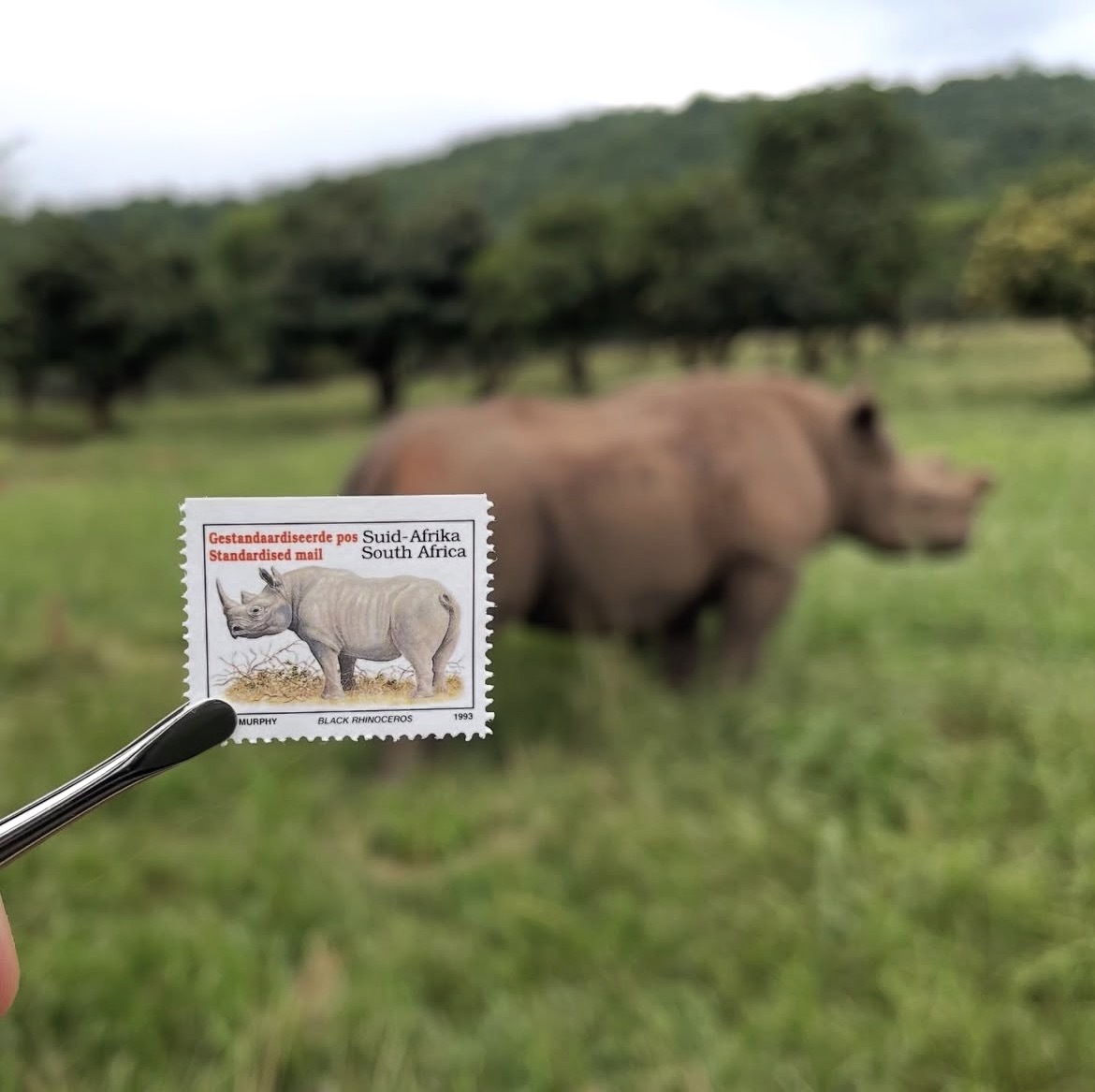
It wasn't popular to my knowledge. My wife, Laura, and I started sharing these excursions on social media and coined the term “extreme philately.” You take the stamp out of its very safe place — its album — then journey to the great outdoors with the stamp that “should be” delicately protected, and hold it in the wind in some stamp tongs as you try to match the location. Stamps represent everything around the world, right? There’s romance associated with stamp albums. There’s some sense of adventure about stamps taking you anywhere.
Was it your intention to somewhat reinvent stamp collecting for new generations?
I wouldn’t say I reinvented stamp collecting. Collectors have always been fascinated by the discovery and community that surround the hobby. My approach is to present that fascination in a contemporary way, particularly through video and social media. I’ve simply made the kind of stamp content that I wanted to watch — with little light documentaries, with animations, and so on. It happens to connect with returning collectors and people outside traditional philately. Response has shown me that the hobby itself doesn’t necessarily need to change, but how we engage with philately can change. The hobby is great, and the traditional aspects of it are absolutely worth preserving. They’re fantastic.
Each generation has brought a different kind of flavor to the hobby and its enjoyment. But I think the hobby’s opportunities are much better today. You can do so much more with it. Technology makes collecting better, but I think we have to make sure we don't optimize all of the surprise out of it. When almost anything can be searched for and purchased immediately, it's easy to focus on acquisition and perhaps we lose a little of the serendipity. Some of the magic of collecting is still the unexpected discovery — the box you haven't searched, the stamp you know nothing about, the dealer who shows you something strange, or the research path that takes you somewhere you weren't expecting.
—
Stay tuned for part 2!
Check Out the Complete Stamp Archive
Want to see ALL of the stamps issued throughout American history? Check out our complete stamp archive, featuring images and information about each issuance from 1847 (when the first U.S. postage stamps were created) until present day. You can filter by topic, series, year, and rate.