
Declaration of Independence Stamp Commemorates America's 250th
A bold stamp design breathes new life into a centuries-old document
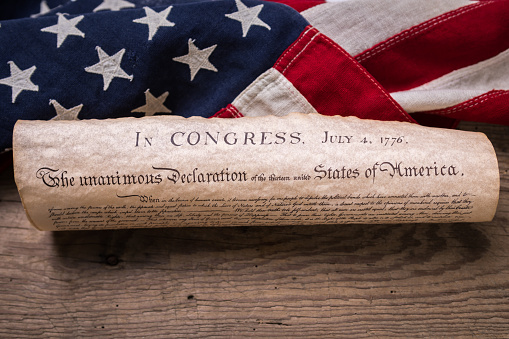
The Declaration of Independence has resonated with Americans since its words first spread across the colonies in 1776. Written in the summer of that year and adopted by Congress on July 4, it marked the moment the American colonies proclaimed themselves no longer subject to British rule.
The Declaration is most widely remembered for its opening lines:
We hold these truths to be self-evident, that all men are created equal, that they are endowed by their Creator with certain inalienable Rights, that among those are Life, Liberty and the pursuit of Happiness. That to secure these rights, Governments are instituted among Men, deriving their just powers from the consent of the governed. That whenever any Form of Government becomes destructive of these ends, it is the Right of the People to alter or to abolish it, and to institute new Government, laying its foundation on such principles and organizing its powers in such form, as to them shall seem most likely to effect their Safety and Happiness.
This was a radical message at a time when monarchies dominated much of the world, challenging long-standing assumptions about power and authority. In stating these principles so plainly, the Declaration gave the American Revolution its moral foundation and articulated the values that would come to define the United States.
The Case for Independence
In the years leading up to 1776, pressure was building between Britain and the American colonies. Taxes were imposed without colonial input, dissent was met with force, and many Americans came to believe their rights as English subjects were under threat. When independence was finally proclaimed, the Declaration would spell it out in 27 grievances — among them taxation without representation, the dissolution of colonial legislatures, and the denial of trial by jury — making the case that a break from Britain was not only justified, but necessary.
Even so, independence was far from inevitable. Many colonists and delegates to Congress still hoped for reconciliation, even after fighting broke out at Lexington and Concord in April 1775. But by early 1776, the mood had begun to shift. Thomas Paine’s Common Sense helped turn that shift into something louder and more unified, its call for independence spreading quickly through the colonies.
That change in sentiment soon reached Congress. On June 7, Richard Henry Lee of Virginia introduced a resolution declaring “that these United Colonies are, and of right ought to be, free and independent States.” Debate followed, and while the vote was delayed, a small committee that included Benjamin Franklin, John Adams, and Thomas Jefferson was tasked with drafting a statement to explain the decision if it came. Jefferson took the lead.
Once Congress reconvened, events picked up speed. A draft was presented on June 28. After days of debate, independence was approved on July 2. The focus then shifted to the wording itself, as delegates revised and refined the document line by line. Two days later, on July 4, 1776, the Declaration was formally adopted.
The news did not sit still for long. On July 8, the Liberty Bell was rung in Philadelphia, and that same day George Washington had the Declaration read aloud to his troops in New York.
The date at the top reads July 4, but most of the 56 delegates signed the document later, on August 2, with others adding their names in the weeks that followed. “My hand trembles, but my heart does not,” said Stephen Hopkins of Rhode Island. Before long, the Declaration was making its way from town to town, where it was greeted with public readings and celebration.
The Declaration on Stamps
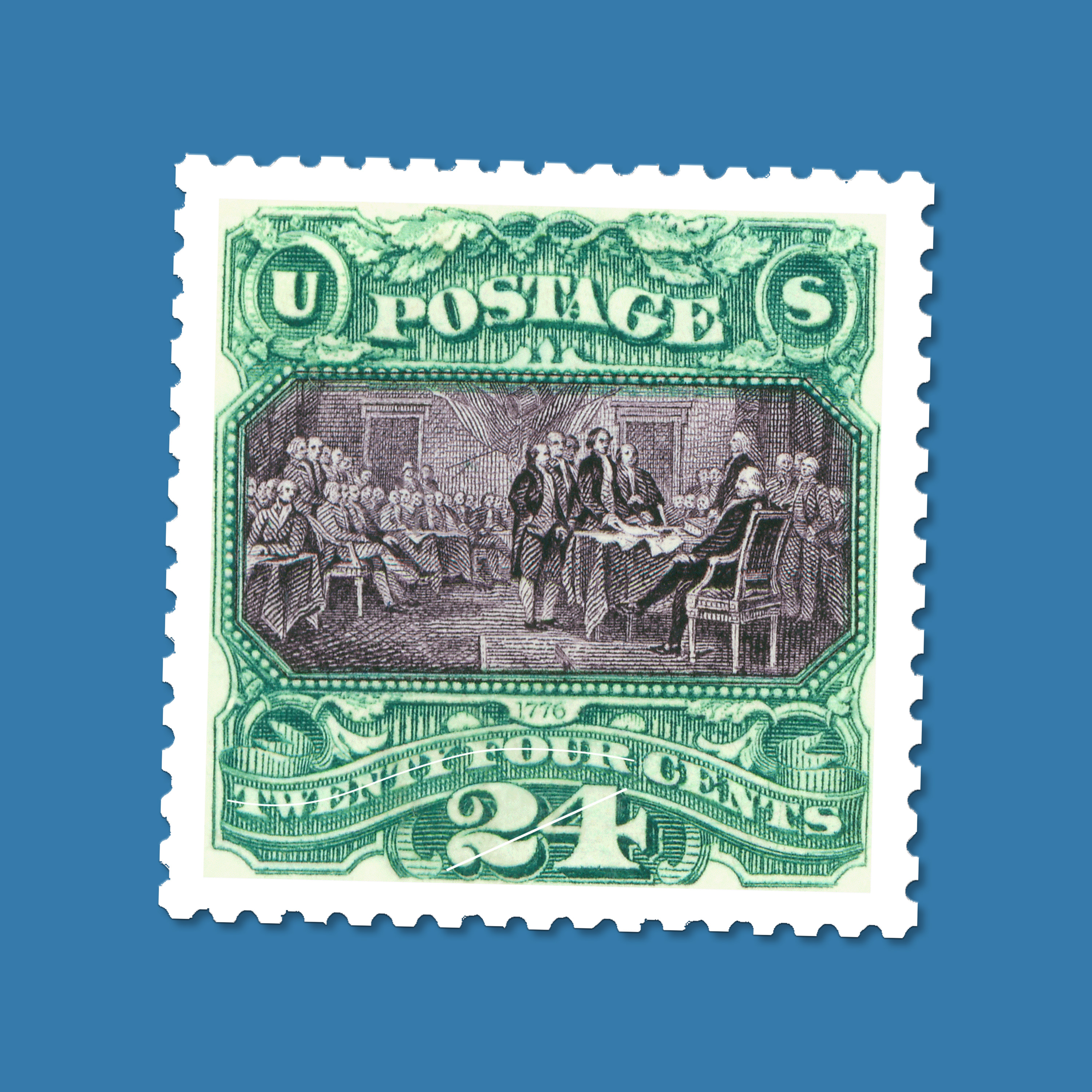
The first U.S. stamp to commemorate the Declaration of Independence appeared in 1869 as part of the Pictorial Issue, a set of stamps issued in 10 denominations. The 24-cent stamp featured an engraved vignette based on John Trumbull’s Declaration of Independence, a monumental painting that now hangs in the Capitol Rotunda in Washington, D.C.
The Pictorial Issue was reprinted in 1875 for display at the Centennial Exposition in Philadelphia the following year. Because these stamps were among the first U.S. issuances to use bicolor printing and required special production, the Post Office Department took the opportunity to print additional quantities for sale to collectors.
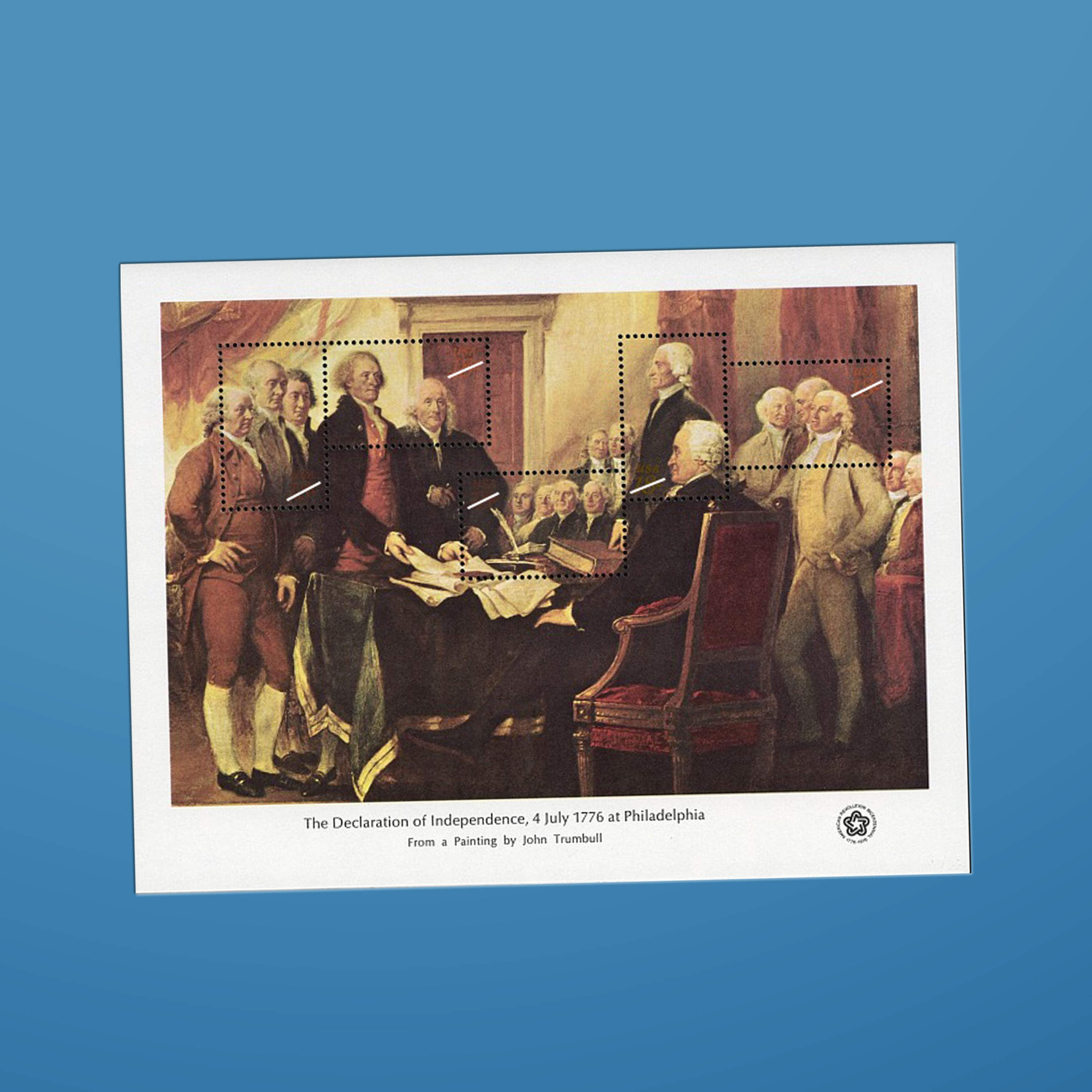
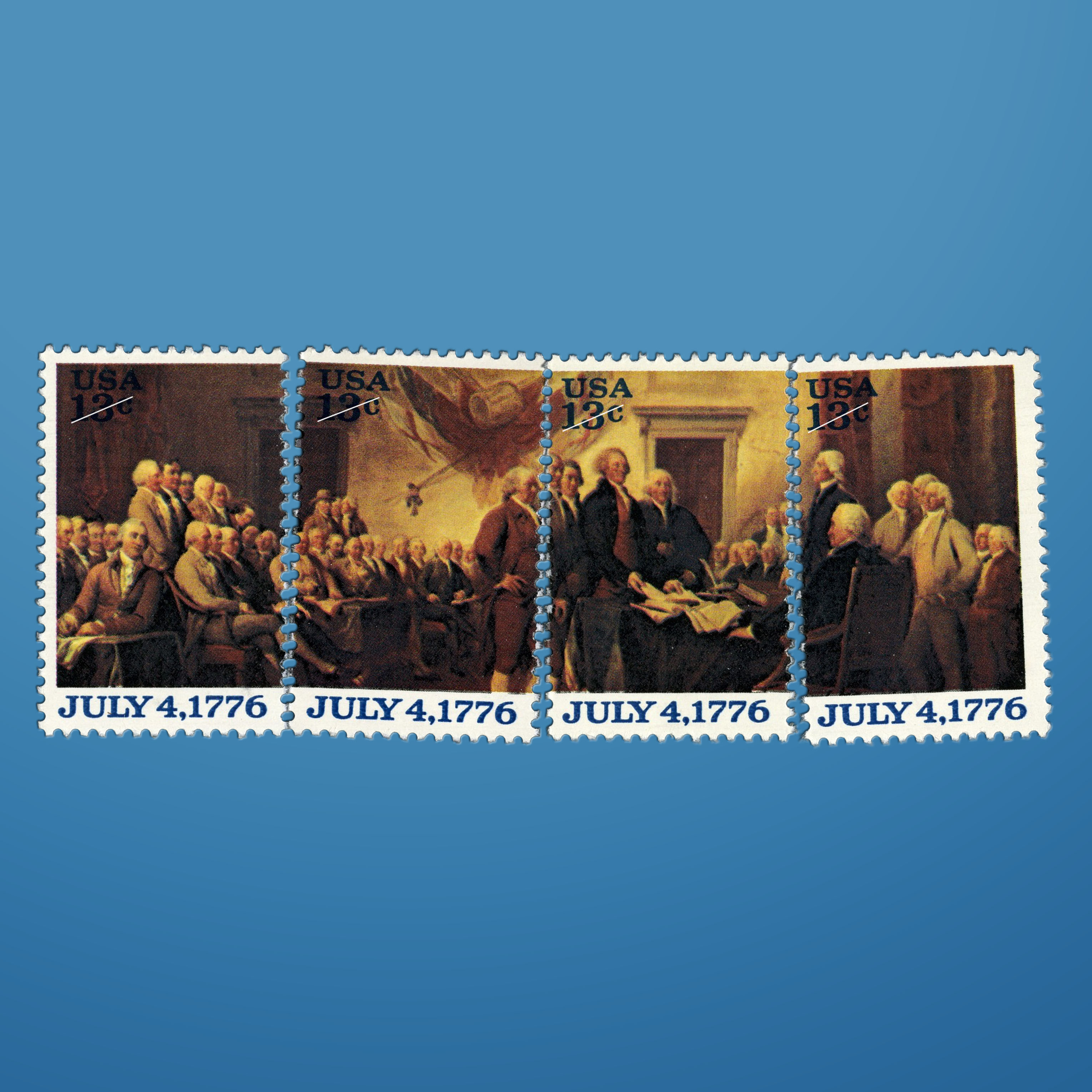
More than a century later, the image returned to U.S. stamps in a new form. In celebration of the nation’s Bicentennial, the Postal Service issued a souvenir sheet of five 18-cent stamps on May 29, 1976. The sheet included a detail from Trumbull’s painting, showing the five-person committee assigned to draft the Declaration — Thomas Jefferson, Benjamin Franklin, John Adams, Roger Sherman, and Robert Livingston — standing before John Hancock, president of Congress.
A larger portion of the painting, showing members of the Second Continental Congress looking on, was issued later that year as a se-tenant of four 13-cent stamps.
That legacy now continues with a design for the 21st century.
A New Interpretation
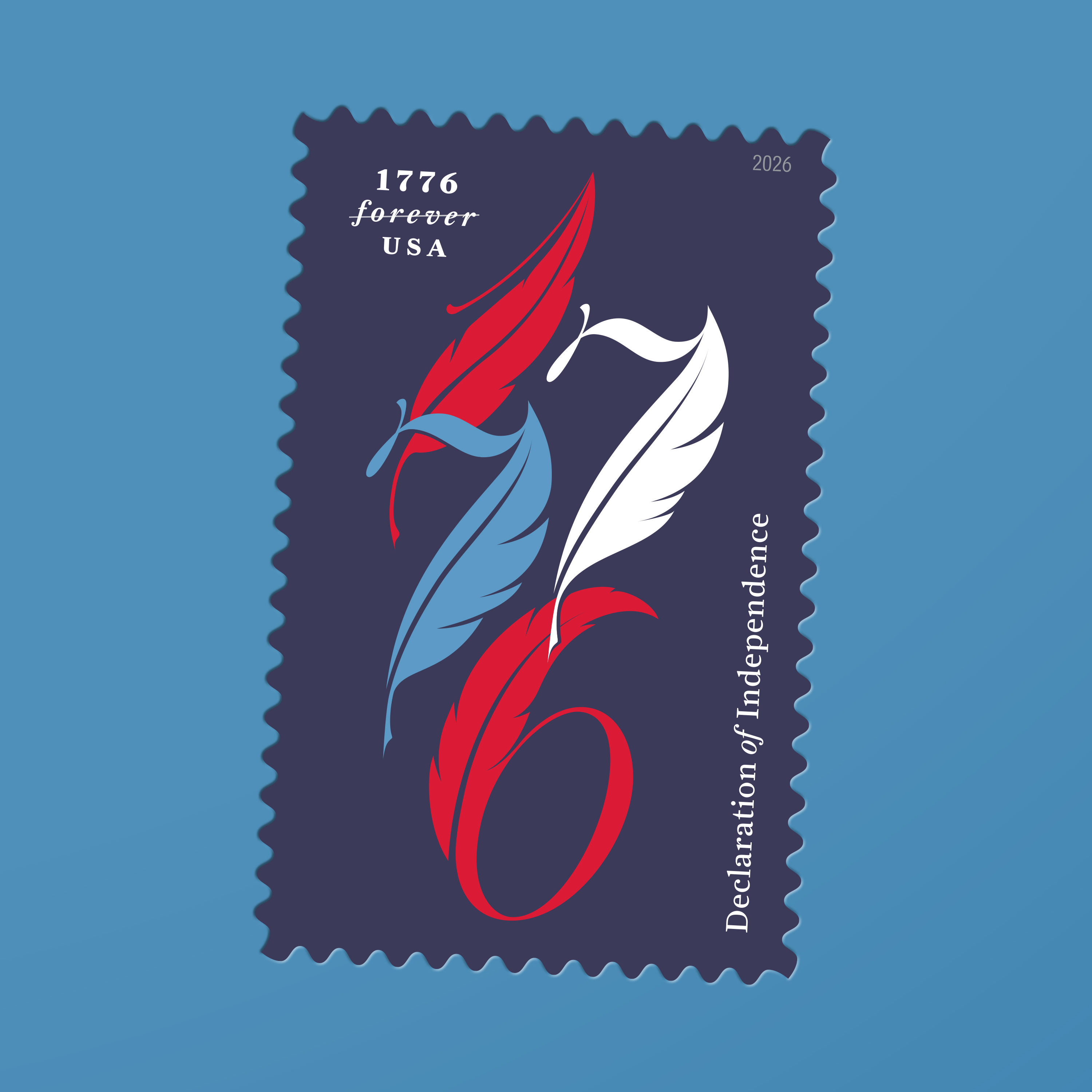
For art director Greg Breeding, designing a stamp for the semiquincentennial of the Declaration of Independence was both a privilege and a challenge. “Because this issuance is part of America’s 250th birthday celebration, I felt especially honored,” he notes. “At the same time, I knew it would be difficult to bring something fresh to such a venerated subject.”
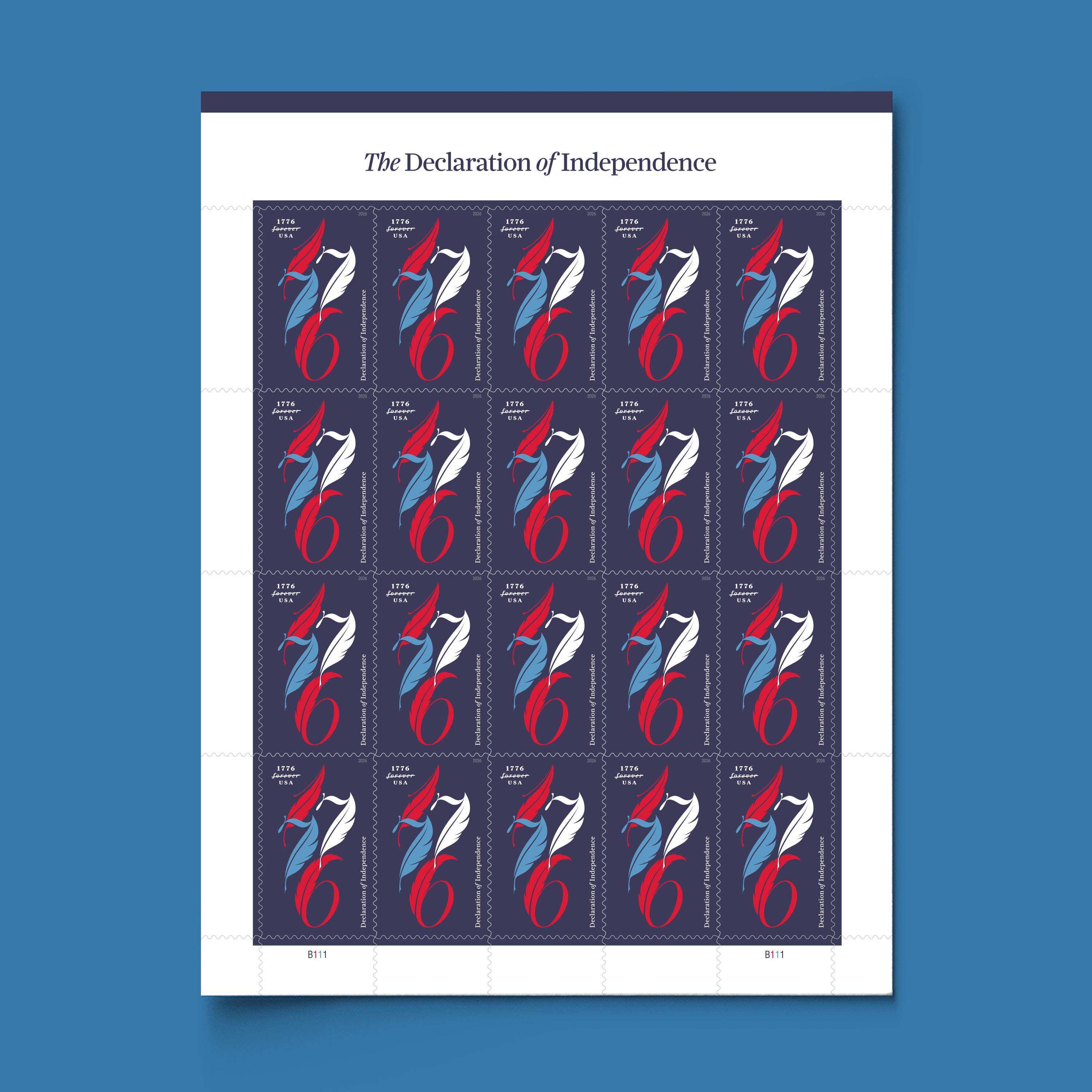
When he began his research, Breeding noticed that earlier stamps featured the familiar Trumbull painting. “I wanted to create a stamp that would be more graphic and iconic,” he says. To achieve that, he turned to designer and typographer Juan Carlos Pagan, whose work is known for its clarity and strong visual impact.
“The year 1776 became an early idea for providing the graphic quality we were looking for,” Breeding explains. “Emphasizing the date itself was compelling.”
Working together, Breeding and Pagan developed a design that balances historical reference with a contemporary visual language.
“While we were very motivated to create something new and distinctive, we also wanted to provide visual cues to the historical context of the subject,” Breeding says. “The feathered quill emerged as an icon with which to create 1776 while also reinforcing the original story.”
In the final design, each numeral doubles as a quill, recalling the writing instruments used to sign the document. Set against a deep blue ground, the sequence of red, white, and light blue numbers nods to the U.S. flag while introducing a subtle shift in tone.
“The credit belongs to Juan Carlos,” Breeding says, noting that Pagan proposed a variation on the traditional red, white, and blue palette. “By having the background of the stamp become a deep blue, he was able to bring a lighter blue into the design alongside the red and white. I think this color solution is both faithful to our national colors while also introducing a modern feel.”
The result is a stamp that honors the past while speaking to the present. With a single date, it captures a defining moment in the nation’s history and the act that set it in motion.
Living Legacy
Over time, the ideals spelled out in the Declaration of Independence have been taken up by Americans working to ensure the country lives up to its founding promises. Its words helped spur the abolition of slavery in the North, influenced the women’s rights movement, and shaped President Lincoln’s vision of democracy. In the 20th century, civil rights leaders drew on its language to demand equality and justice.
Now preserved in the U.S. National Archives, the Declaration endures as both a founding document and a living symbol of the principles that continue to guide the United States.