Postcrossing Global Stamps and Maxicards: Real Mail, Genuine Connections
Four new stamp designs celebrate the Postcrossing website for promoting connection and understanding across countries and cultures
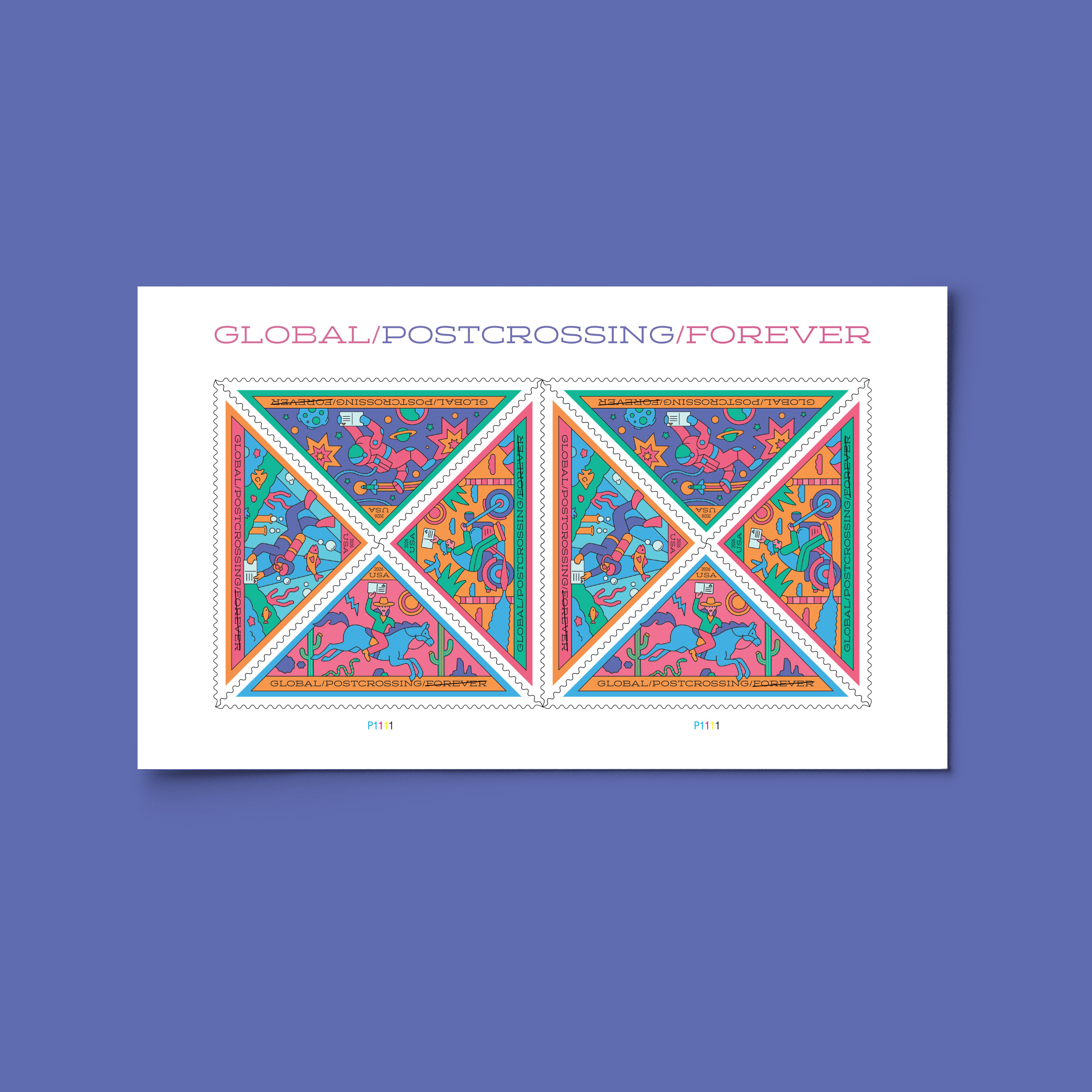
“What a fantastic system: free and fun to get mail from elsewhere!” says Antonio Alcalá, who designed the new Postcrossing stamps with illustrations by Jackson Gibbs. That’s Postcrossing in a nutshell: As a website, a hobby, and a community, it’s a fun way to receive a surprise in the mail, or to brighten the day of someone else with only a postcard, a stamp, and a curious mind.
Created in 2005 by Portuguese student Paulo Magalhães, Postcrossing is an ever-growing community of more than 805,000 members worldwide who’ve mailed more than 85 million postcards. At any given moment, more than 300,000 Postcrossing-inspired postcards are on their way to a waiting mailbox.
To participate in Postcrossing, you only need to sign up and send your first postcard according to the instructions on the website. Soon after one of your postcards reaches its destination, you’ll receive one in the mail yourself. The more you send, the more you’ll receive.
But what should I write?
No matter what kinds of postcards you send, being thoughtful is all it takes to be a good Postcrosser. Members often write personalized notes that highlight aspects of their hometown, their interests, or their lives. When receiving cards, Postcrossers are encouraged to enjoy the surprise. They may discover something new about an unfamiliar city, learn more about the history of another country, encounter a work of art for the first time, or glimpse a moment in the life of someone on the other side of the world.
By joining Postcrossing, you’re helping encourage worldwide human connections that have led to all sorts of educational, historical, and philanthropic projects. Postcrossing has inspired school projects and museum exhibitions, and the website has helped raise funds for disaster relief and other causes.
Postcrossers also organize regular in-person meet-ups. If you’re curious to learn more, find a meetup near you and chat with avid Postcrossers. You’ll hear them praise the pleasant surprise of receiving real mail and the fun of taking a few moments to brighten the day of someone on the other side of the world. Above all, you’ll hear about small acts of creativity and kindness, proof that what Postcrossing members are sharing reaches far beyond the four corners of a postcard.
The Postcrossing stamps: Global mail made easy
Many U.S. Postcrossers mail their postcards with multiple stamps that add up to the international rate. Others enjoy using a round, eye-catching Global stamp. The Postcrossing stamps give you another easy option for international mail, whether you’re a Postcrosser or not.
As Global stamps, the Postcrossing stamps may be used to send a postcard from the U.S. to any country to which First-Class Mail International® service is available. In addition to adding a fun touch to any postcard, these stamps are also an eye-catching way to spread the word about Postcrossing by using them on international letters. They’ll have a postage value equivalent to the price of the single-piece First-Class Mail International first-ounce machineable letter in effect at the time of use. In short, they’re similar to Forever® stamps, but for international use.
Postcrossers in the U.S. praise these new stamps for their triangular shape, which will leave extra space on postcards for an address or a message. Members in other countries are also clamoring to receive them, and you can easily use them on all of your international mail.
Of course, sending a Postcrossing postcard with a Postcrossing stamp virtually guarantees that you’ll make somebody’s day. Getting handwritten, personalized mail is always a treat, but those extra touches matter. You may even make a one-of-a-kind collectible.
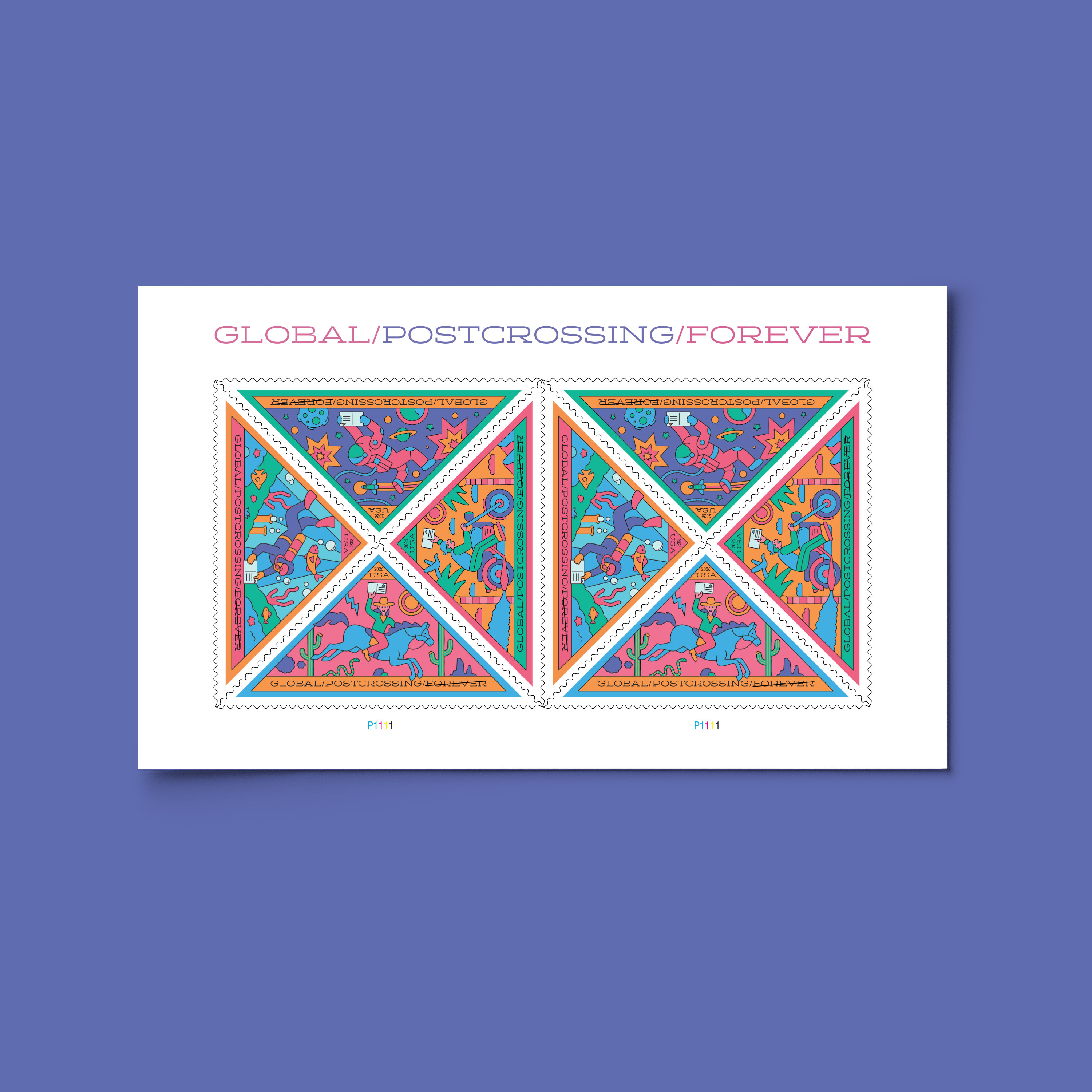
Pane of 8
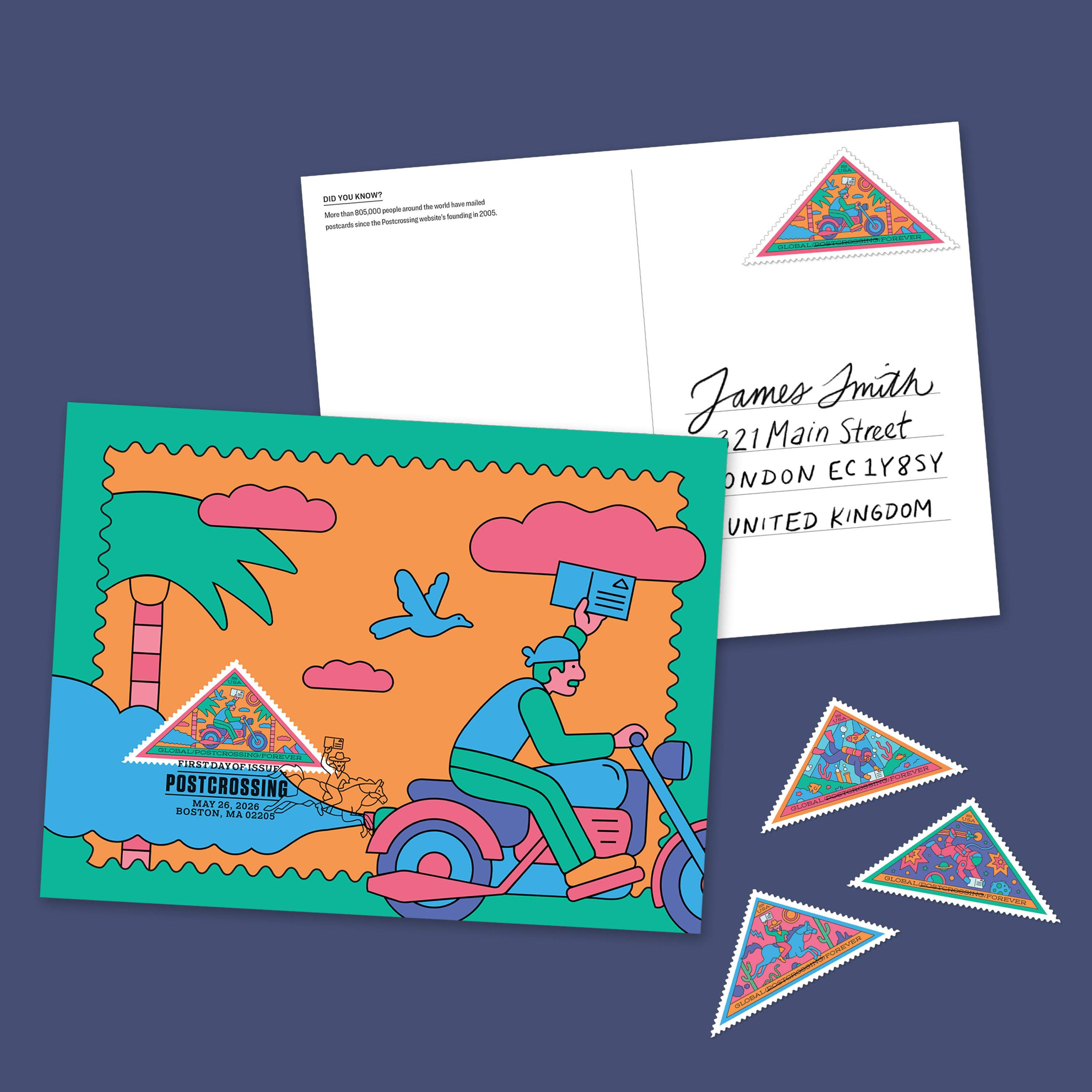
Maxicards: A hot Postcrossing collectible
New Postcrossers often wonder: What are the “maxicards” people keep asking for in their profiles?
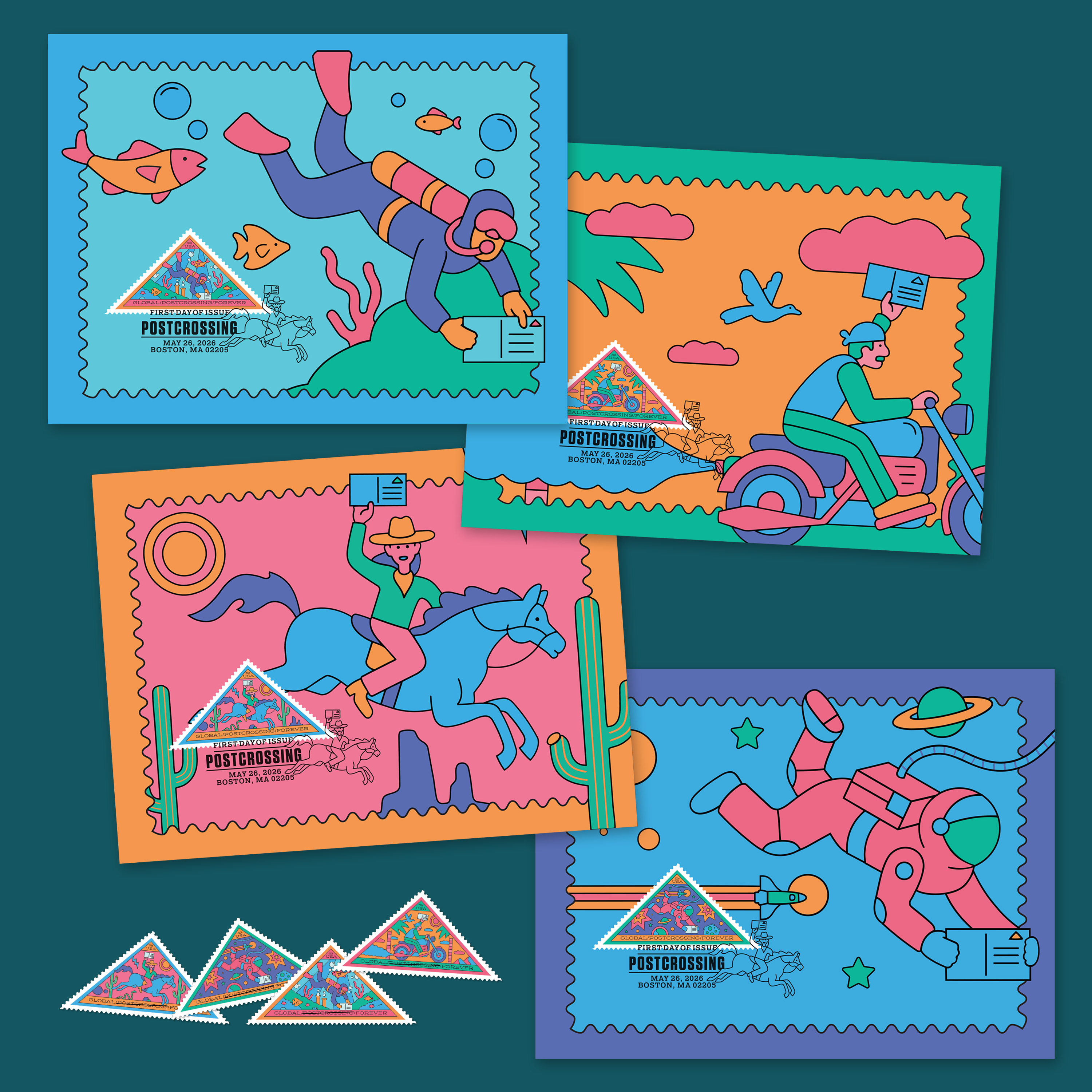
Long coveted as collectibles, maxicards are postcards that combine stamps, postcards, and imagery in especially thoughtful ways. The stamp on a maxicard goes on the image side of the postcard, never the address or message side, and must be postmarked on the image side as well. When the postcard artwork, the postmark, and the stamp all have a thematic connection, collectors call this “maximum concordance,” the term that gives maxicards their name.
Here's an example: One of the 2025 Battlefields of the American Revolution stamps shows a photograph of the Bunker Hill Monument in Boston. Take a postcard with a relevant image on it — perhaps the monument itself or a painting of the 1775 battle — and put the stamp on the image side. Then get it postmarked with a relevant place and date, such as a Boston Post Office on the 250th anniversary of the Battle of Bunker Hill. If you can line up all those details, you’ve made — or, to use the technical term, “realized”— a maxicard.
When the Postal Service issues new stamps, you can turn postcards into maxicards by sending them into us the same way collectors receive other first-day postmarks.
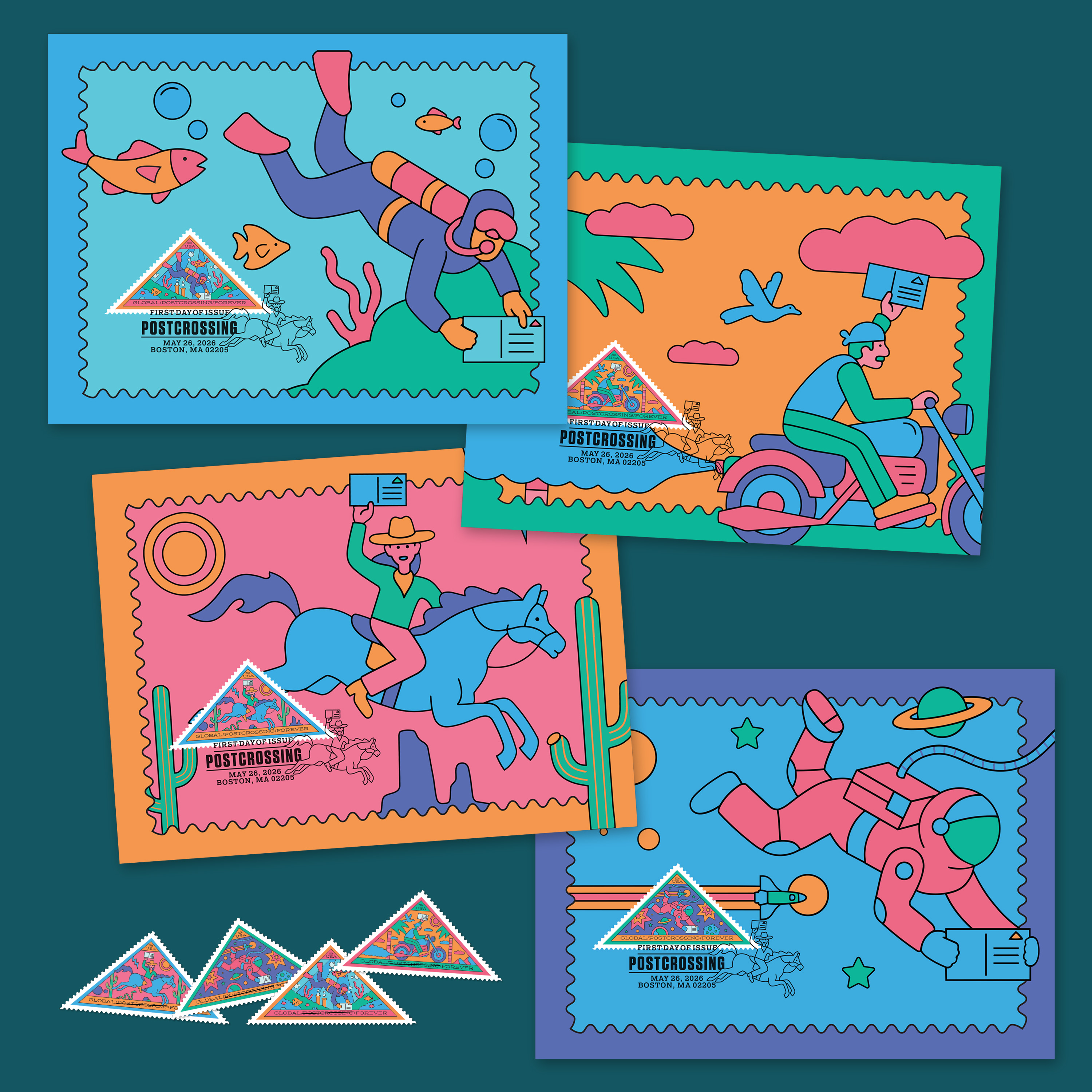
Because “maximizing” the postmark is often the trickiest part, one of the special products we’re releasing along with the Postcrossing stamps is a set of four maxicards, the first official U.S. Postal Service maxicards in quite a while.
If you plan to send the official Postal Service maxicards to others, you’ll need to decide whether to address them or to mail them unaddressed in a separate envelope. Your choice will likely depend on whether your recipient is a serious collector or a more casual Postcrosser. Either way, you’ll be making a connection with a message of goodwill.