Stamps Honoring Military Service
Four recent stamp issuances explore the history of American military service from the Revolution to today
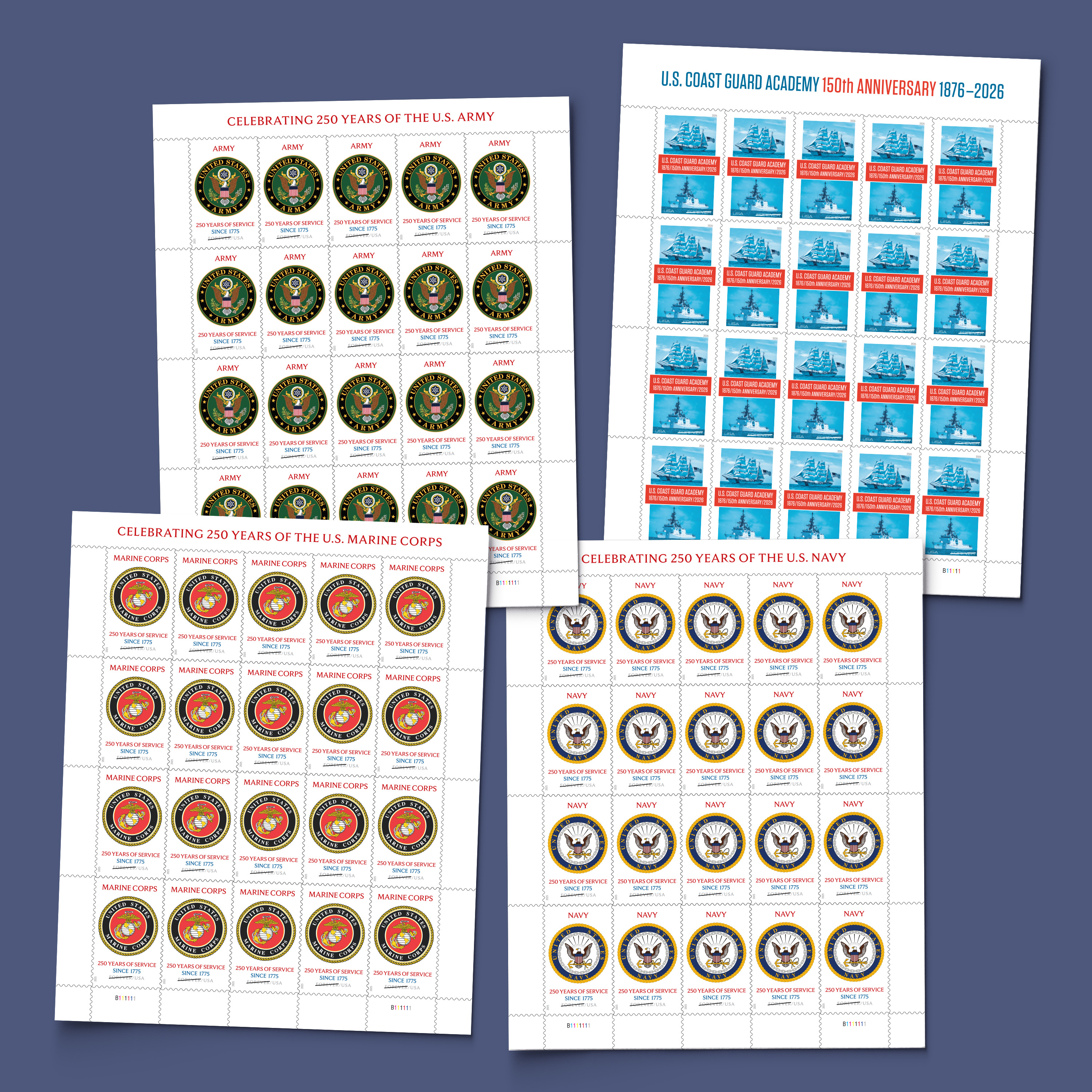
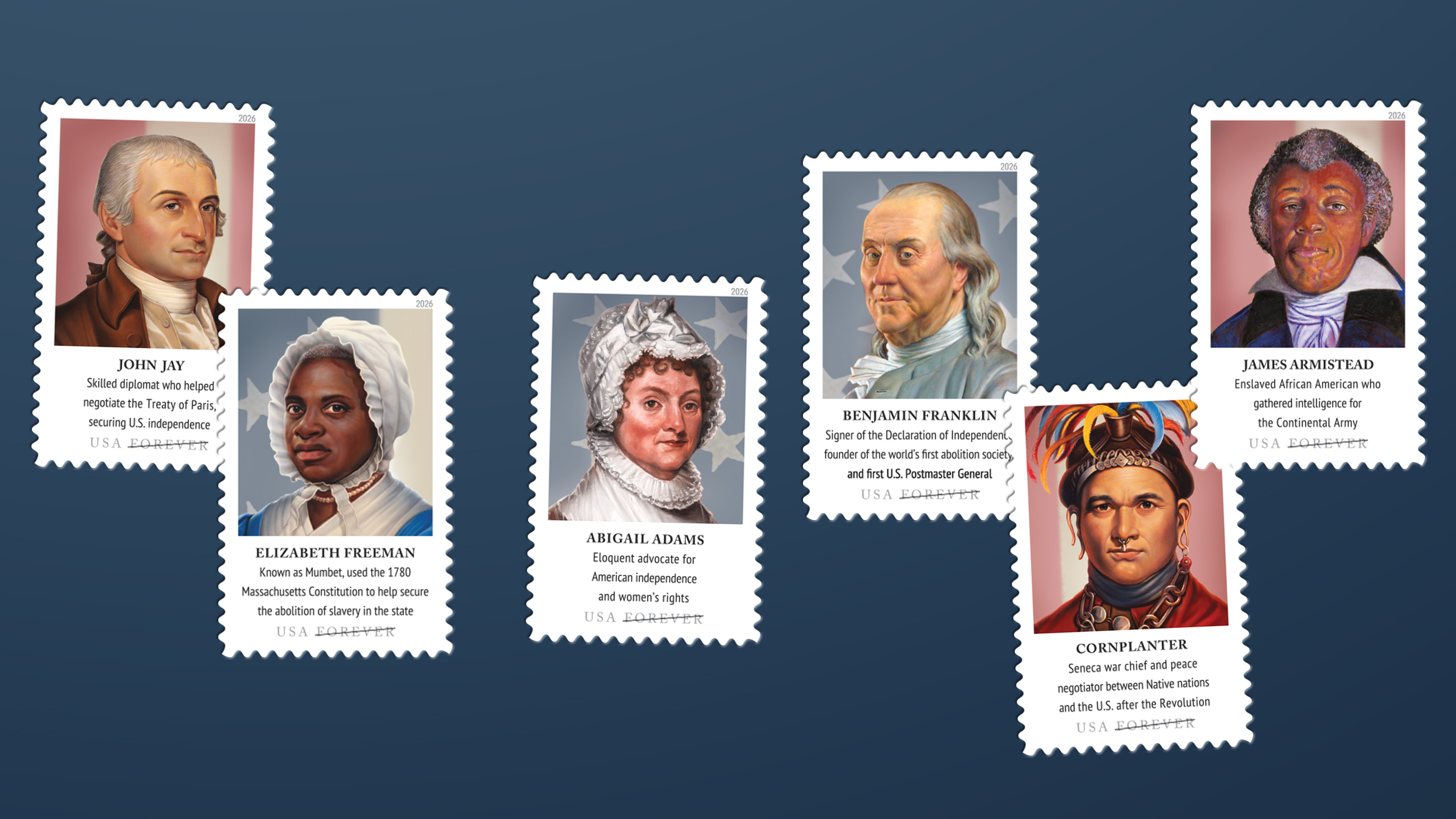
Every generation of Americans has answered the call to serve. The U.S. Postal Service has long helped preserve and share those stories through stamps. Four recent releases explore the history of American military service, from the revolutionary beginnings of the U.S. Army, Navy, and Marine Corps to the officers preparing to carry the legacy forward.
From Revolution to Service
The U.S. Army, Navy, and Marine Corps were all born in 1775. By the time the first shots of the American Revolution were fired in Massachusetts in April, New England militias were already fighting British troops and had surrounded British forces in Boston. But the fighting quickly made one thing clear: The colonies could not rely indefinitely on separate local militias to wage a war that increasingly involved all of them. They needed a unified force.
Meeting in Philadelphia, the Second Continental Congress resolved on June 14, 1775, to establish the Continental Army. Within days, George Washington was unanimously nominated and officially commissioned as commander in chief. He took command of the forces around Boston in July and, in an early victory for the new Army, forced the British to evacuate the city.
The war raised a similar problem at sea. The colonies had no unified naval force, while Britain possessed one of the world’s most powerful fleets. Rather than leave each colony to maintain its own ships, Congress began considering a fleet of its own. On October 13, it authorized the first two ships of what would become the Continental Navy. Their immediate purpose was to intercept British vessels carrying military supplies. Congress soon authorized additional ships, creating a fleet that, by the end of the war, would extend from New England to Georgia.
On November 10, less than a month after authorizing the first ships, Congress approved the raising of two battalions of Marines. Samuel Nicholas, a prominent Philadelphia citizen who had been commissioned as a captain, established a recruitment center at a local tavern and is honored today as the first Commandant of the Marine Corps.
The three forces did not have the same fate after the Revolution ended in 1783. Although the Continental Army continued after the war, both the Navy and the Marine Corps were disbanded. Attacks on American merchant ships in the Mediterranean, however, led Congress to reestablish the Navy on March 27, 1794. Its first officers were Revolutionary War naval veterans, and construction of the first warships, including the USS Constitution, became a national effort, with frigates built in six states.
On April 30, 1798, President John Adams signed into law an act establishing a Department of the Navy, ensuring that the Navy would become a permanent American institution. A few months later, on July 11, Congress ordered the re-creation of a Marine Corps.
Three Branches, Three Marks of Service
When the Postal Service set out to commemorate the 250th anniversaries of the U.S. Army, Navy, and Marine Corps, the original plan was to honor all three with a single stamp. But it quickly became clear that each branch deserved its own design to reflect its unique history and significance.
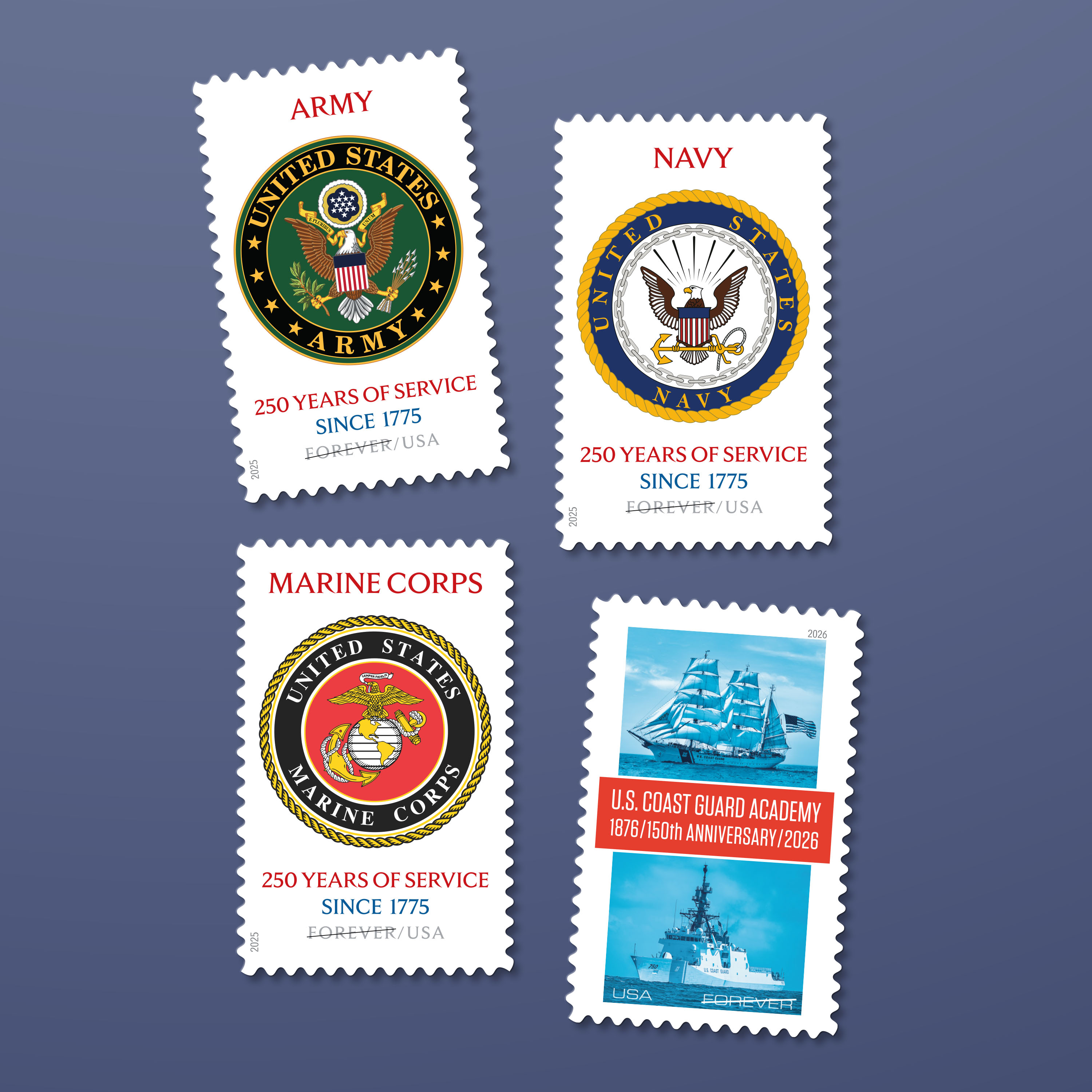
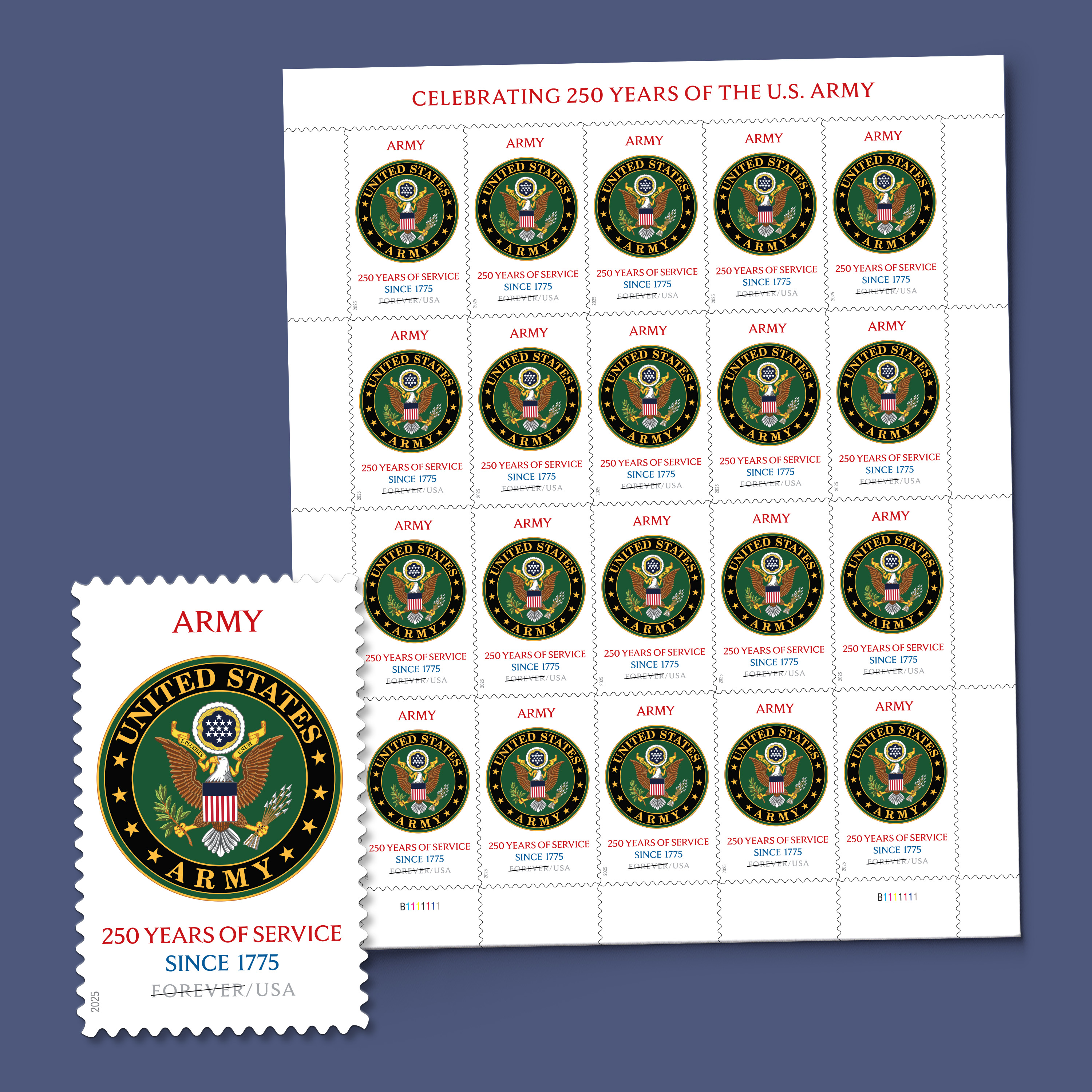
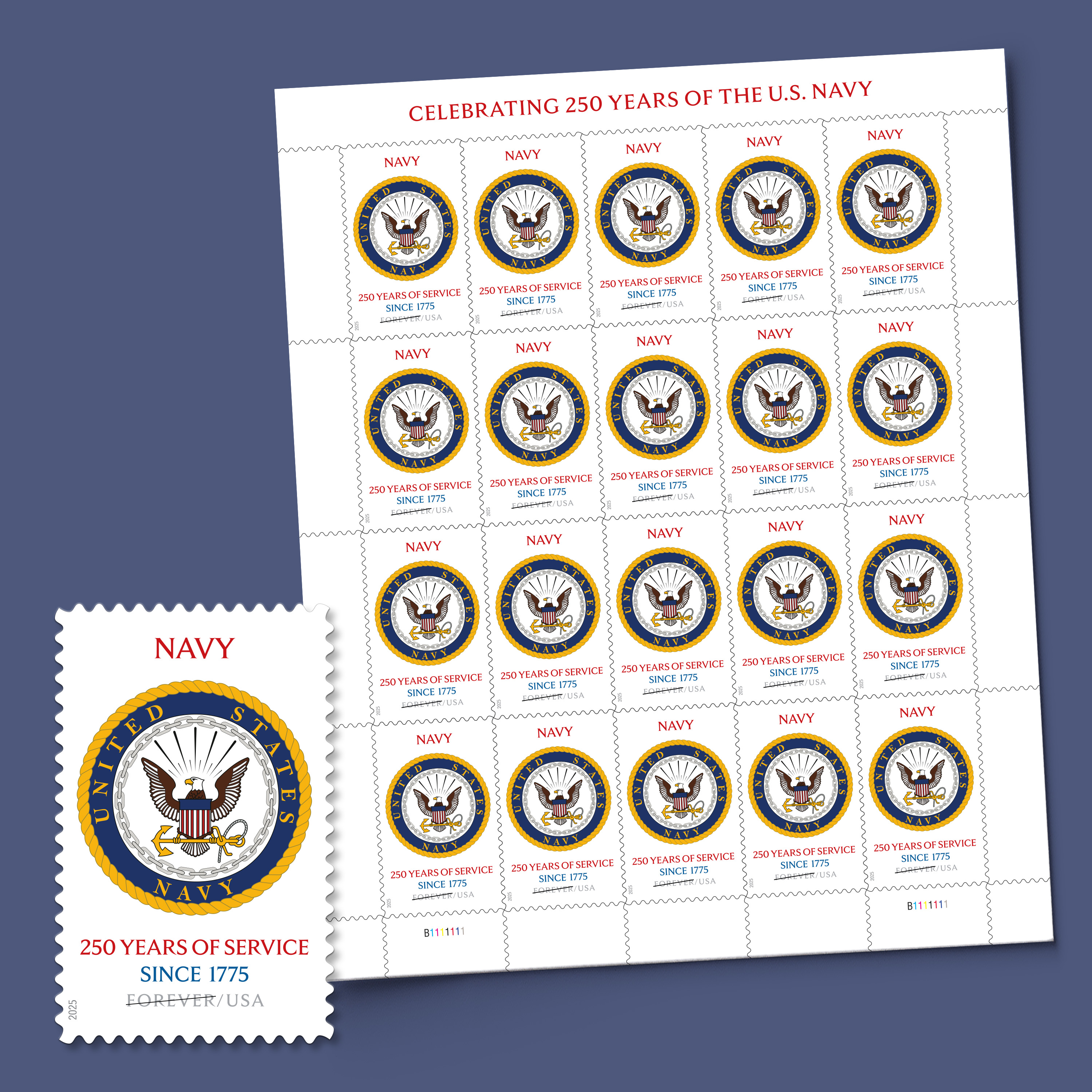
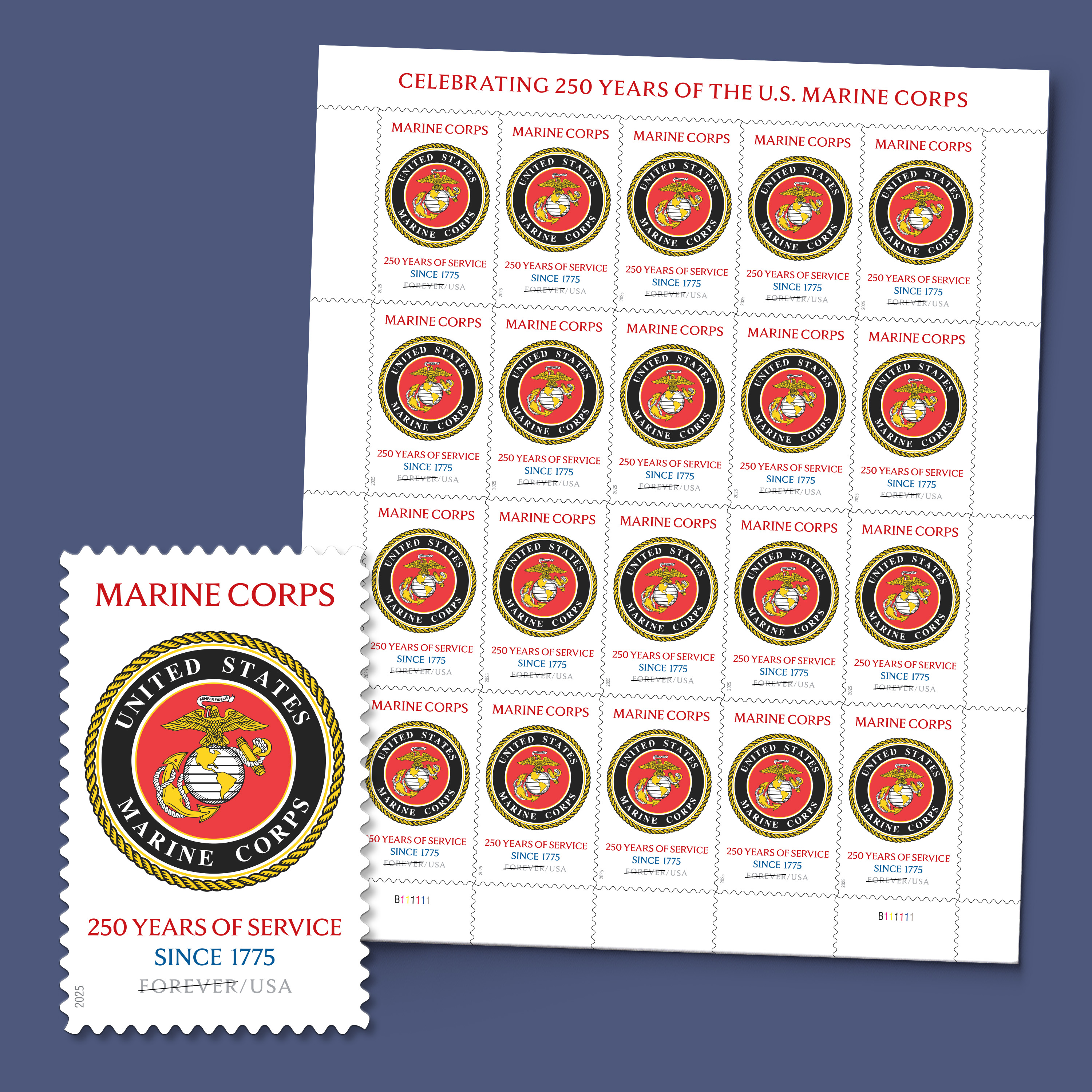
Art director Antonio Alcalá began by examining artwork from stamps created 50 years ago. He soon realized that a fresh approach was needed. His solution was to feature the branches’ service marks: versions of their official emblems, symbols, or seals that may be used outside the military with the permission of each branch. The three marks provided a way to give each stamp its own identity while maintaining a sense of unity.
The Army's service mark prominently features the Great Seal of the United States, while the Navy’s includes an American bald eagle grasping an anchor in its talons. The Marine Corps mark showcases the branch’s timeless Eagle, Globe, and Anchor.
“This approach allowed us to treat all three branches equally,” Alcalá explains. “And all three branches agreed.”
Alcalá then turned to the typography, seeking a typeface that would complement the service marks without overshadowing them. The goal was to balance the marks with dignity and consistency across all three designs.
The result is a set of stamps that looks to the history of each branch while recognizing the dedication and sacrifice behind 250 years of military service. “I hope these stamps reflect the unwavering pride that service members feel for their branch and its legacy,” says Alcalá.
A Legacy Still in Motion
That legacy is not simply a matter of history.
With its Revolutionary-era motto “This We’ll Defend,” today’s Army includes approximately 450,000 active-duty soldiers, more than 325,000 soldiers in the Army National Guard, nearly 190,000 soldiers in the Army Reserve, and more than 265,000 civilians who provide mission-essential support to the Army, all guided by its core values of loyalty, duty, respect, selfless service, honor, integrity, and personal courage.
More than 330,000 active-duty personnel and more than 56,000 reservists serve in the Navy, upholding its core values of honor, courage, and commitment. They protect shipping lanes, conduct humanitarian missions after crises, and prepare for conflict while keeping the seas open and free.
More than 170,000 active-duty Marines remain committed to the nation and to one another. Deeply respectful of tradition while remaining highly adaptable and ready to serve, the Marine Corps is guided by its motto, Semper Fidelis, or “Always Faithful.”
Training the Next Generation
The commitment to service also depends on preparing those who will carry it forward.
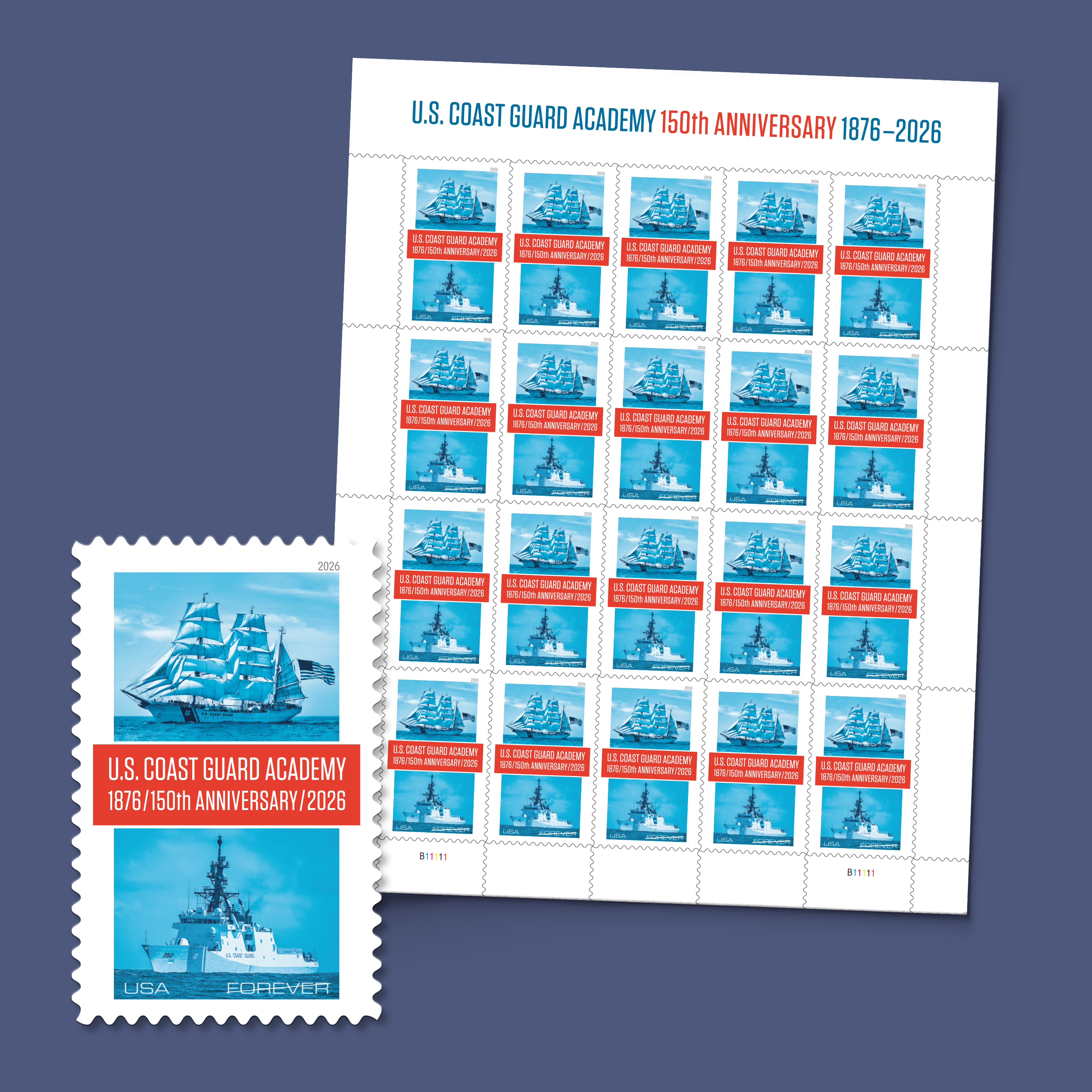
In 2026, the Postal Service commemorated the 150th anniversary of the United States Coast Guard Academy, an institution dedicated to preparing young cadets to serve as officers in the U.S. Coast Guard.
The Academy began in 1876 as the Revenue Cutter School of Instruction. Its first nine cadets went to sea in 1877 aboard the topsail schooner James C. Dobbin, beginning a tradition of hands-on training that continues today aboard the barque Eagle. Today, around 1,070 cadets prepare through academic study, physical training, extracurricular activities, and seamanship. Each graduate earns a Bachelor of Science degree and a commission as an ensign in the Coast Guard and commits to at least five years of service.
That connection between tradition and the future is central to the United States Coast Guard Academy stamp. Art director Antonio Alcalá paired a photograph of the Eagle, the Academy’s primary training vessel since 1946, with a photograph of USCGC Bertholf, a modern Legend-class National Security Cutter. Both images are tinted blue, evoking the water and sky.
“These two ships communicate the old and the new,” Alcalá explains, “and suggest the way the Coast Guard Academy honors tradition but is a part of our modern joint force.”
Carrying the Legacy Forward
For 250 years, the U.S. Army, Navy, and Marine Corps have answered the call to serve. And for 150 years, the United States Coast Guard Academy has prepared new generations to do the same. Veterans Day offers an annual opportunity to recognize those who have served, while these stamps remind us that missions, technology, and the world may change, but the commitment to service endures.