
Bald Eagle Stamps Present a Fresh Take on America's National Symbol
Five new stamp designs feature realistic paintings of bald eagles at different life stages
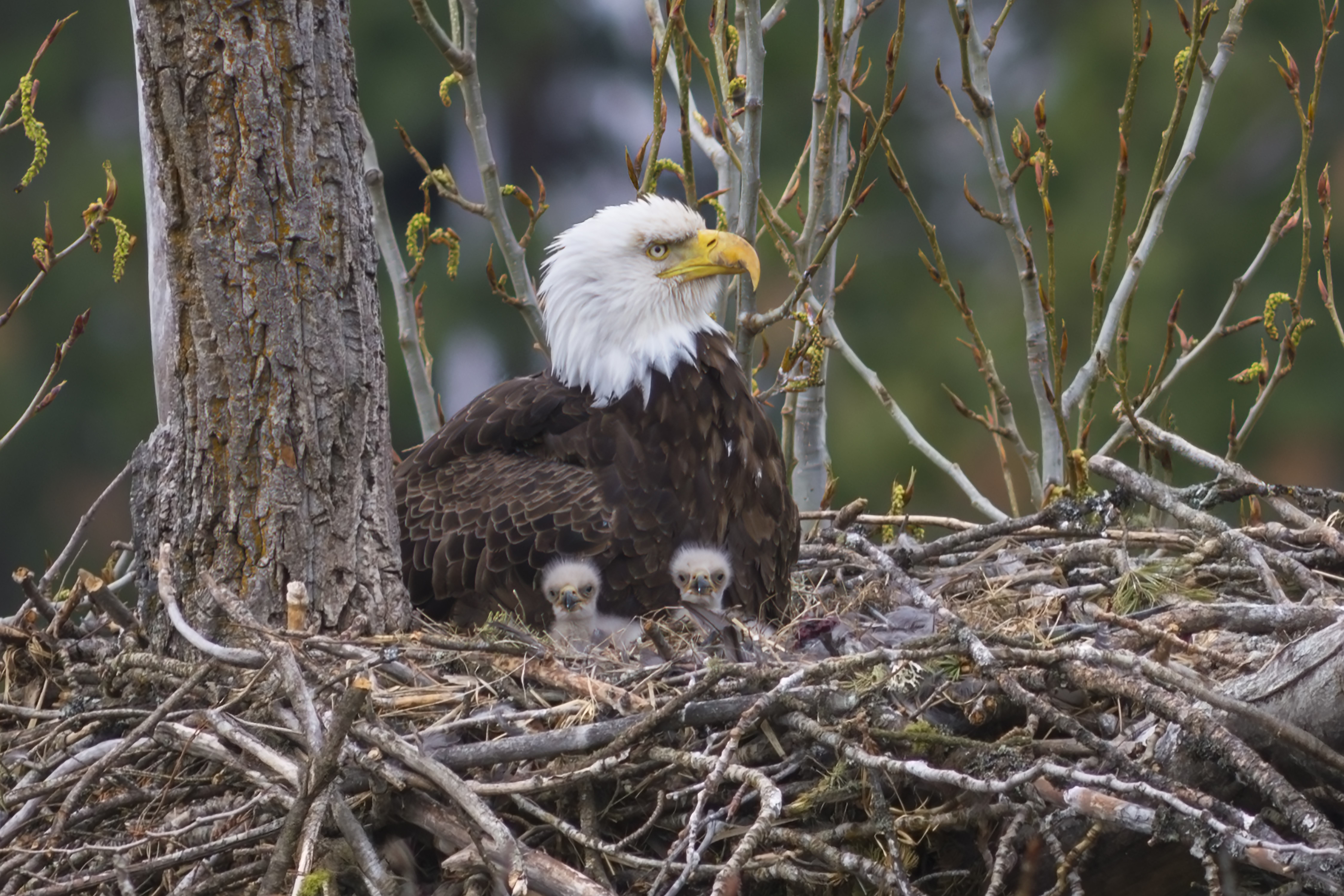
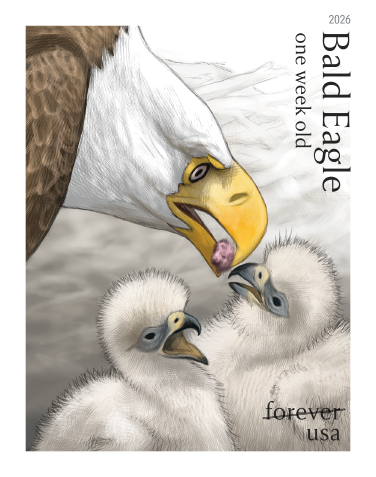
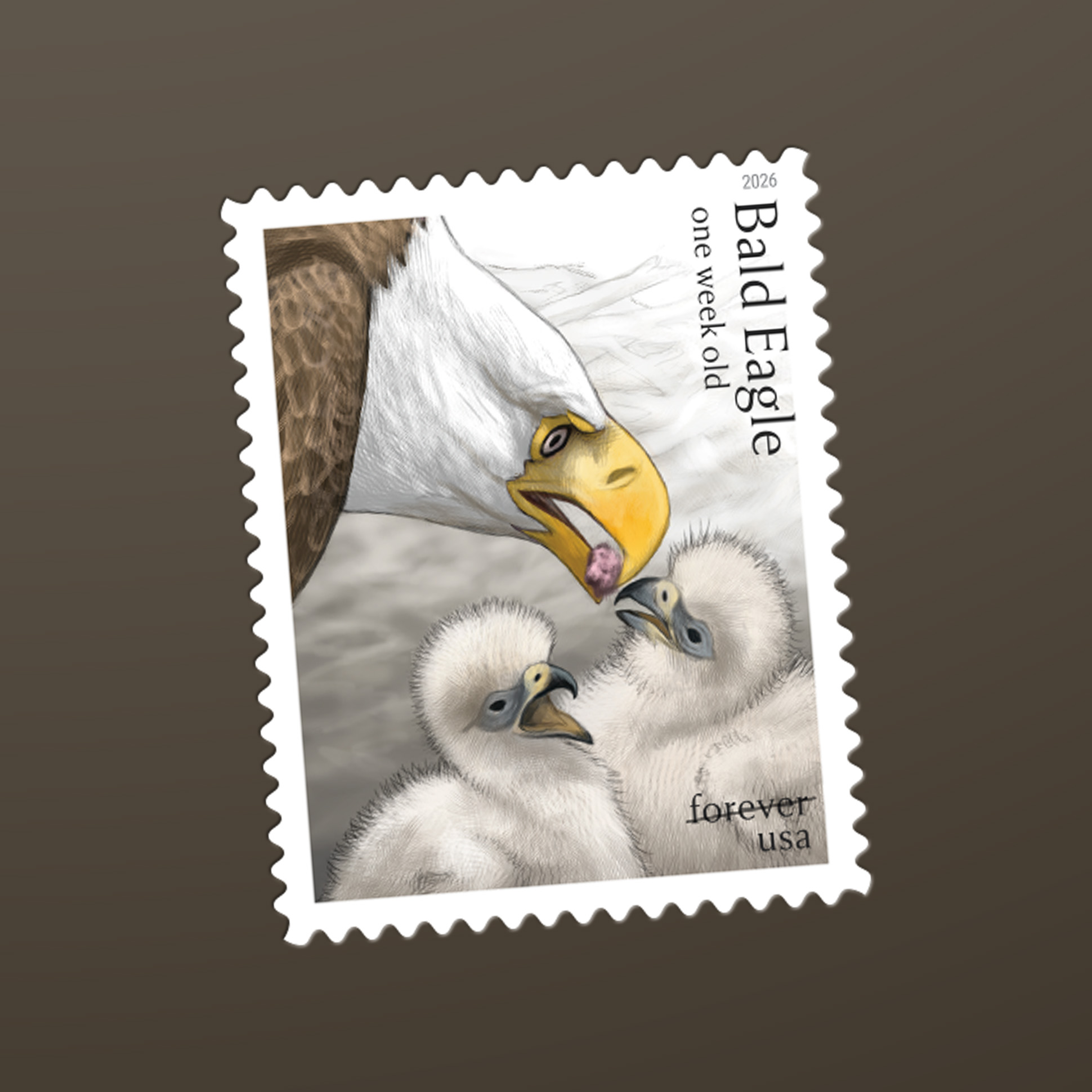
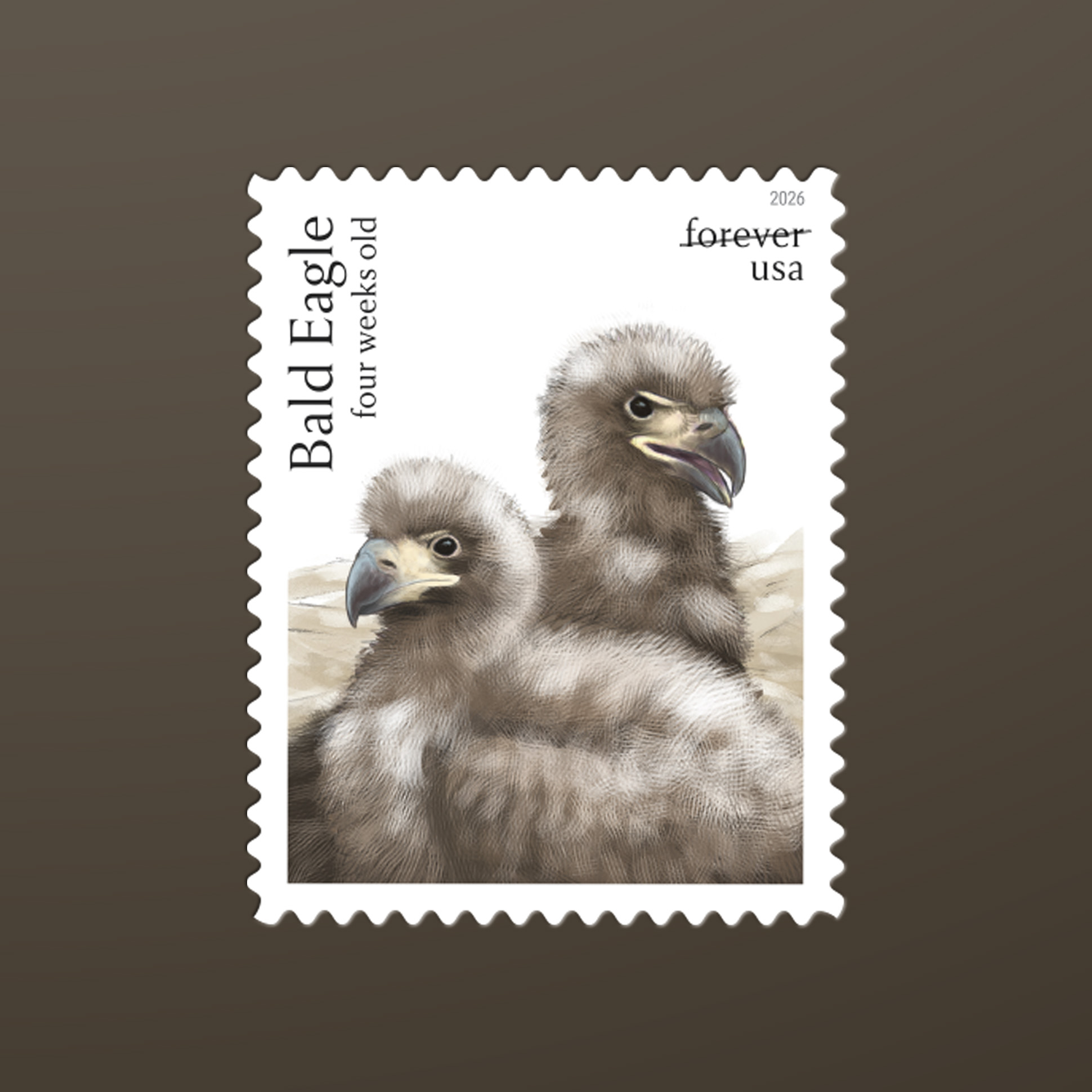
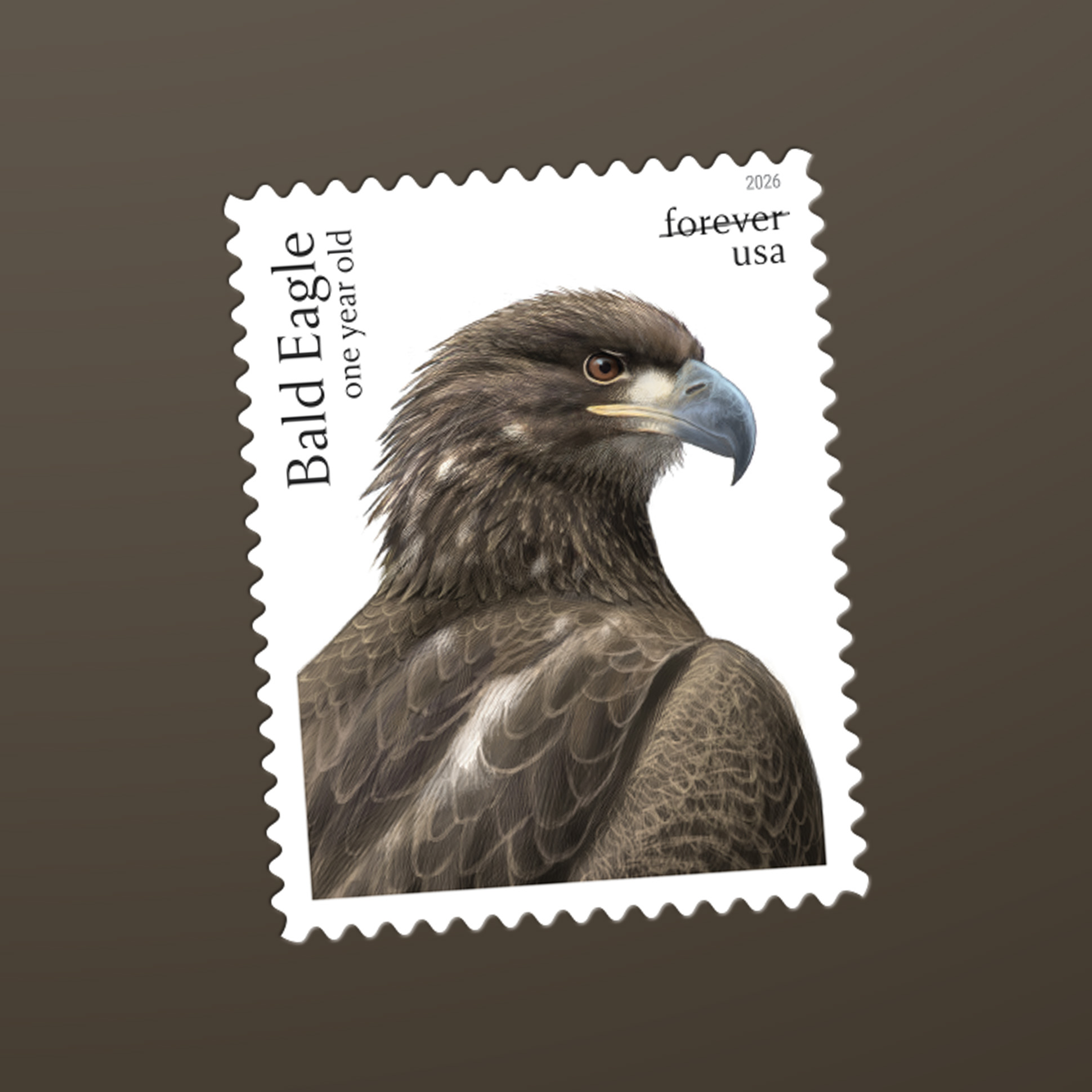
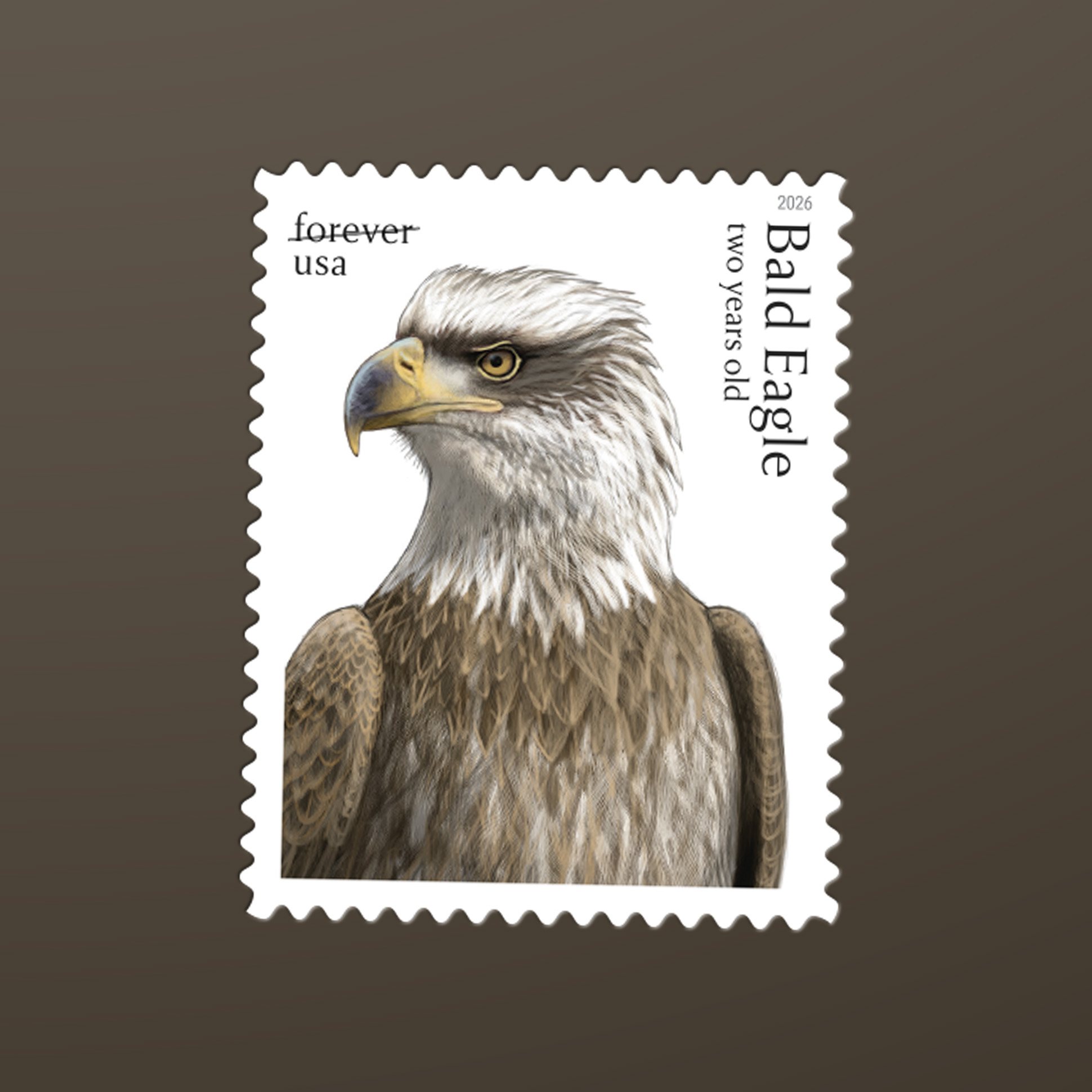
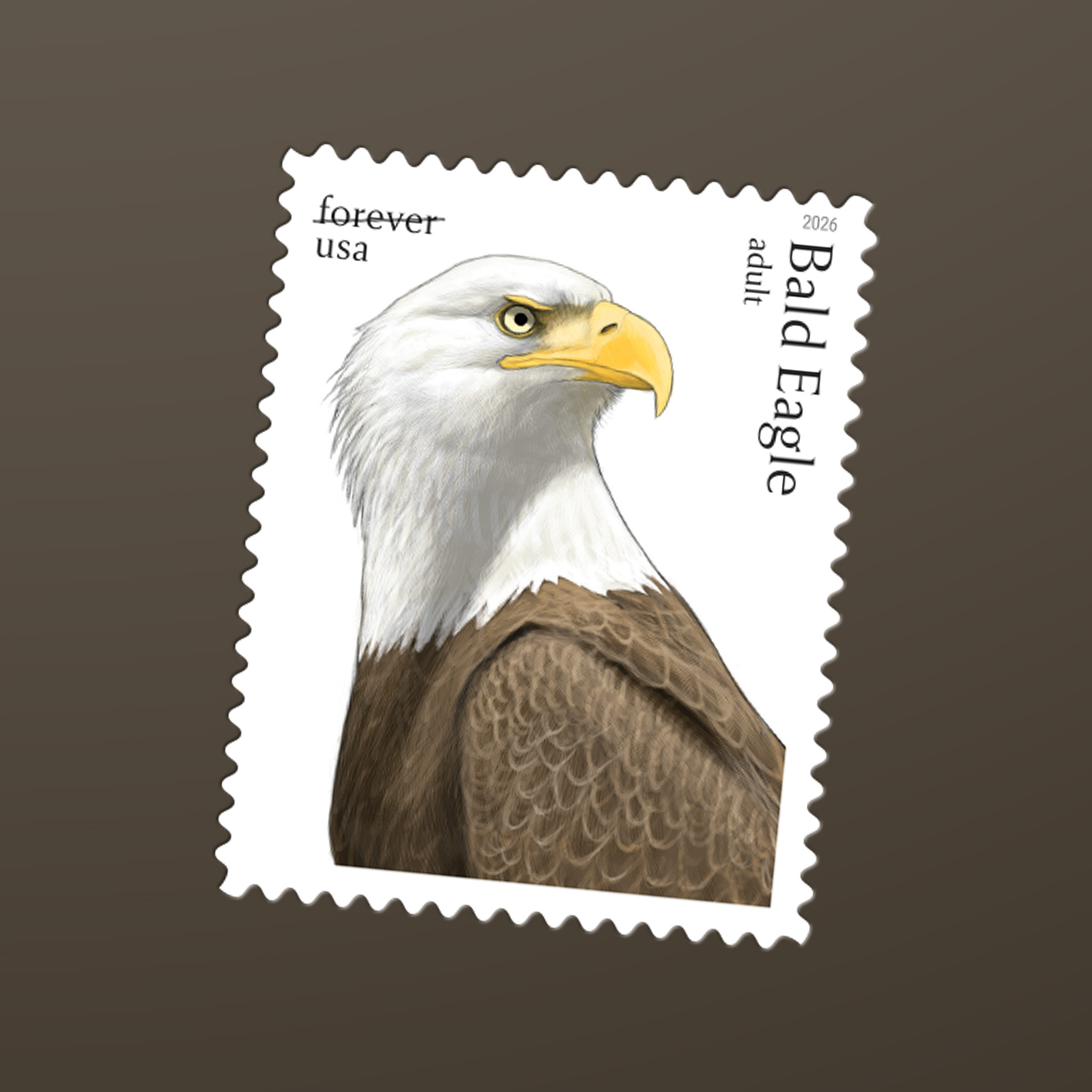
Native to North America, bald eagles have embodied American ideals like freedom, courage, strength, and independence since the early days of the republic. The 2026 Bald Eagle: Hatchling to Adult commemorative stamps honor our national bird with realistic illustrations of bald eagles at different life stages. Designed by art director Derry Noyes, the stamps continue a long tradition of featuring these iconic birds of prey on U.S. postage. For this project, Noyes chose to use naturalistic paintings by noted ornithologist and writer-illustrator David Allen Sibley rather than the stylized art of most past issuances.
Sibley, who is known for his detailed, realistic depictions of birds as well as his numerous guidebooks on avian wildlife, spoke to us about his work on the Bald Eagle: Hatchling to Adult stamps.
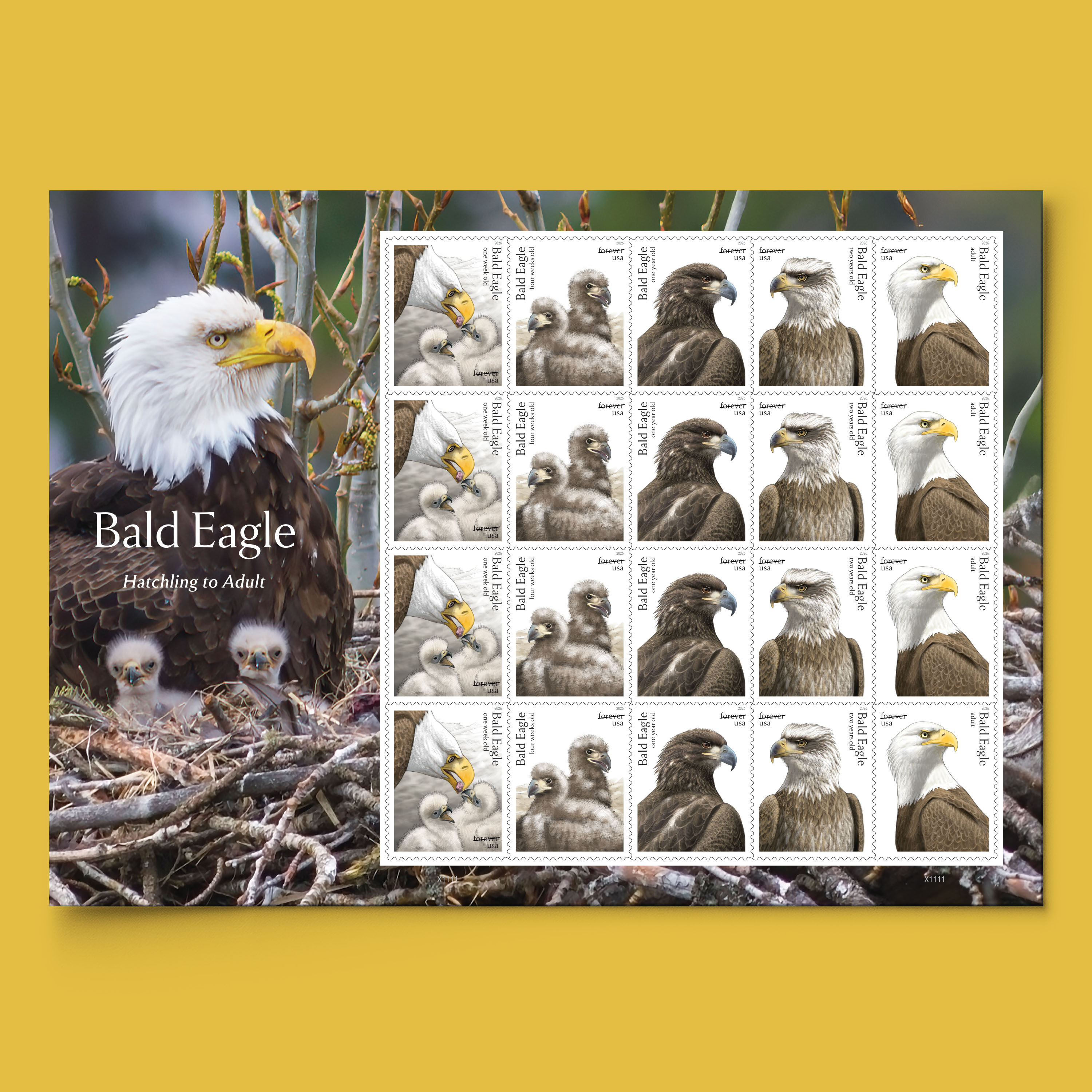
Pane of 20
How did you first become interested in learning about and drawing birds?
Well, my father is an ornithologist, so that surely had something to do with it. I had exposure and access to all things bird-related, and when very young became interested in birds and drawing them. Age seven is when I got serious enough to start keeping a list of all the birds I had seen.
I also liked to draw things like dinosaurs, which are the ancestors of birds. Watching and drawing are two things that really enhance each other. For me, they have always gone together — I watch birds and I draw them.
How did you approach the challenge of capturing five stages in a bald eagle's life within the constraints of the stamp format?
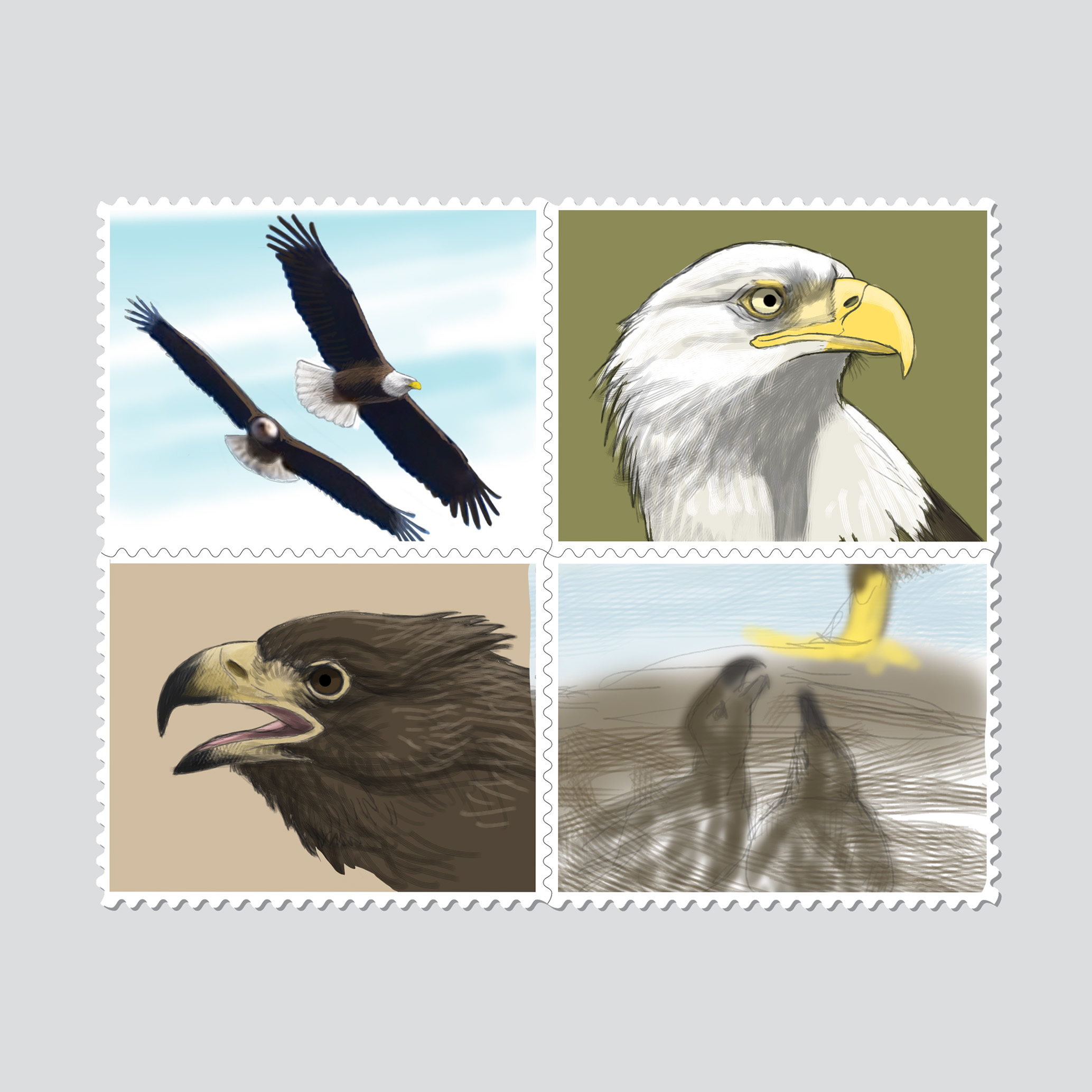
This is the same challenge I was faced with in my field guide illustrations. Distilling the variation in bald eagles into five postage stamps was very tricky — which life stages to show, what poses to use, or whether to show the whole bird or just a part. I worked with USPS art director Derry Noyes, whose help was invaluable, to figure out the best approach. After multiple drafts, we settled on using roughly similar views of the eagle(s) to emphasize the differences between ages, and also decided to zoom in on the heads to show enough detail.
Your artwork is recognized for its detailed focus on the shapes, proportions, and color patterns of birds. Were you trained in a particular style or approach?
No, I have no formal training. I went to college for one year as a biology major, but I dropped out to spend my time outdoors watching and drawing birds. Through my father and his colleagues, I got a very thorough informal education in ornithology. I listened in on graduate student discussions and helped out with research, and it was the same with my art. I knew that I wanted to illustrate birds and create a field guide, so I studied other artists' work and practiced the techniques they used.
I wanted these stamps to make people think about the bald eagle as a bird, as well as a national symbol.
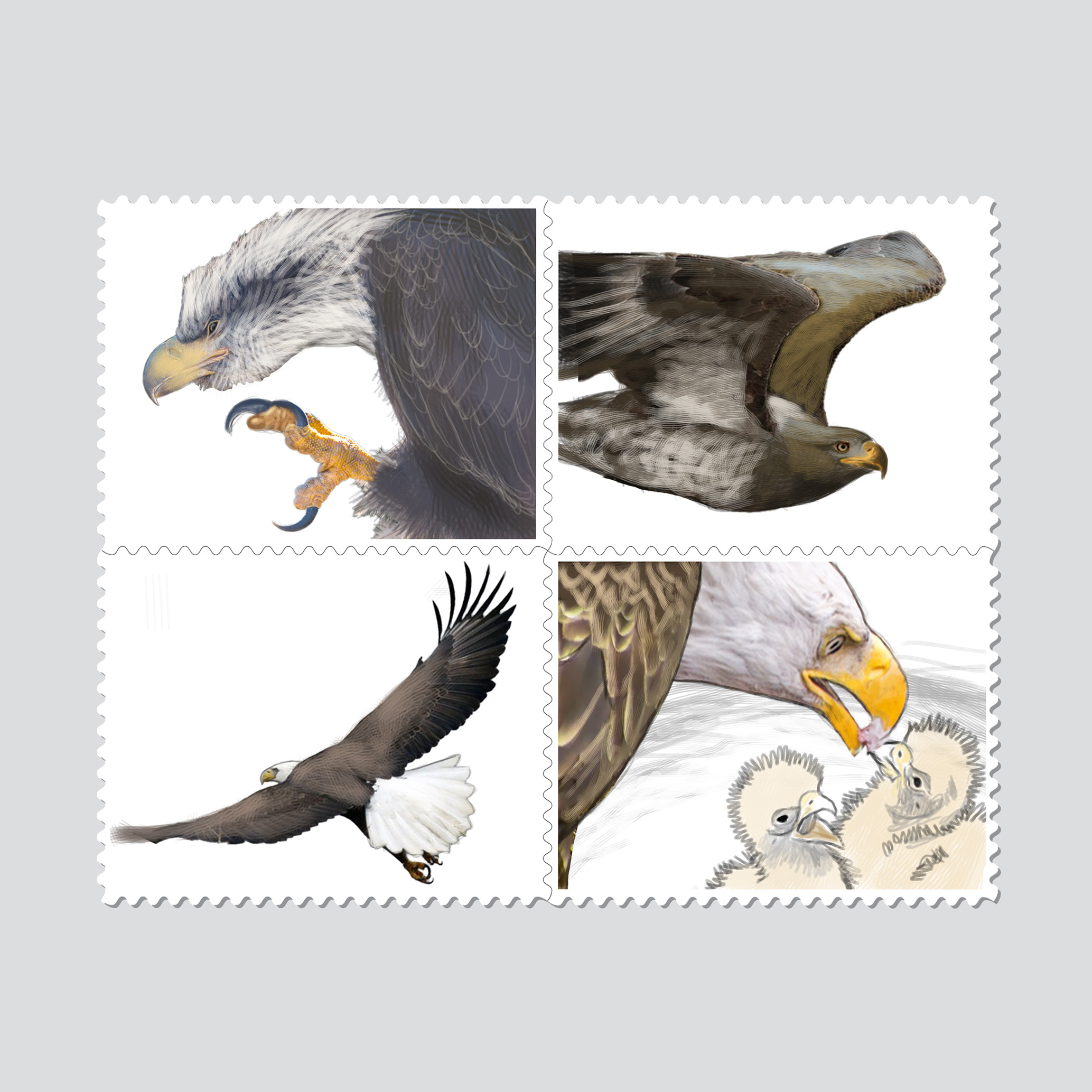
In the United States, bald eagles are icons — rich in historical, cultural, and ceremonial significance. What do you hope people unfamiliar with bald eagles will learn or appreciate about them through these images?
I wanted to show bald eagles in a more natural way. It is our national bird, but to me, it is just one of the hundreds of species of birds that make up the national birdlife. I wanted these stamps to make people think about the bald eagle as a bird, as well as a national symbol.
While the bald eagle is known to virtually all Americans as our national bird, few people know much about them. Showing the series of life stages in these stamps was a simple and visual way to emphasize that the familiar adult eagle, with its dark body and white head and tail, has already lived for at least four years in the wild. It has undergone a series of transitional plumages and has had to learn how to find food, migrate, and survive many of life's challenges. I hope these stamps spark curiosity and a greater appreciation for the lives of eagles.
What does it mean for you to have your artwork represent culture on a national scale, especially in a format that is so accessible to people across the country and around the world?
It is a great honor to have my artwork featured on these stamps. I still consider myself just a birdwatcher who paints, so this opportunity is something I never expected. I am also thrilled that bald eagles are featured on the stamps, with the goal of enhancing public awareness about them. For me, the natural world is an essential part of the national culture. Our quality of life still depends on fish, trees, birds, and other wildlife, and these stamps honor that connection.
You mentioned your studio is located in an old Massachusetts farmhouse and that you’re fortunate to see many birds when you look out your window. How does being so close to nature impact your creativity?
My illustrations are my interpretation of the birds around me. That is informed by all kinds of things, but the most important is familiarity with my subject. There are countless, indescribable, subconscious things that find their way into my illustrations, and if I wasn’t seeing and studying live birds in their environment on a regular basis, some of that would be lost. There is a pair of bald eagles that nests along the Connecticut River just a half mile from my house, and I see them often. Just being outdoors and watching any birds makes me happy and helps to keep my artwork fresh and vibrant.